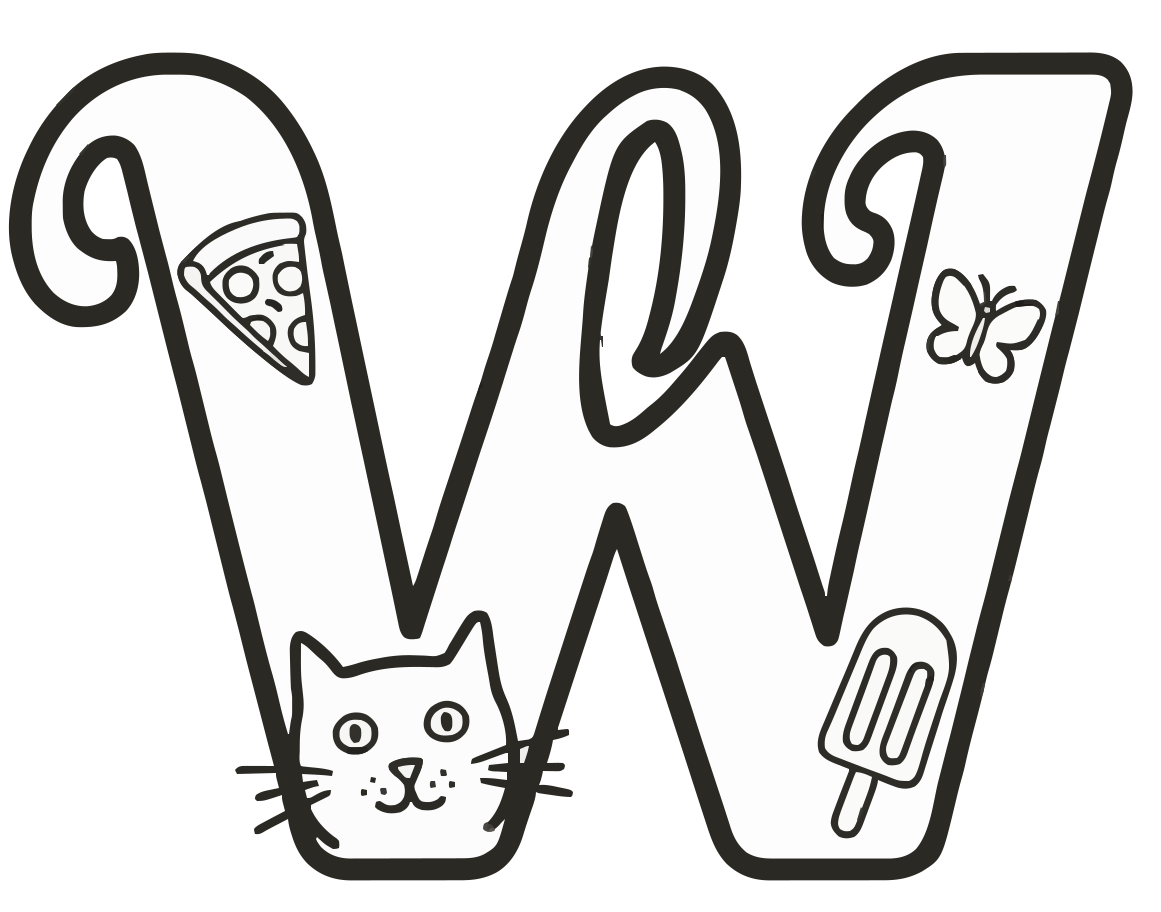
50 Easy Drawing Ideas for Beginners
You're staring at a blank page with a pencil in hand and absolutely no idea what to draw. It happens to every artist — beginner or not. The good news is that simple easy drawing ideas are everywhere once you know where to look. This list gives you 50 of them, sorted by category, so you can pick one and start drawing in the next 60 seconds.
No experience needed. No special supplies. Just pick an idea and go.
Easy Animal Drawing Ideas
Animals are the single best starting point for beginner artists — especially cute easy drawing ideas like cats and rabbits. Their shapes are forgiving, their features are expressive, and there's no "wrong" way to draw them. Start with animals that have simple, rounded silhouettes — you'll be surprised how much personality you can get from just a few lines.
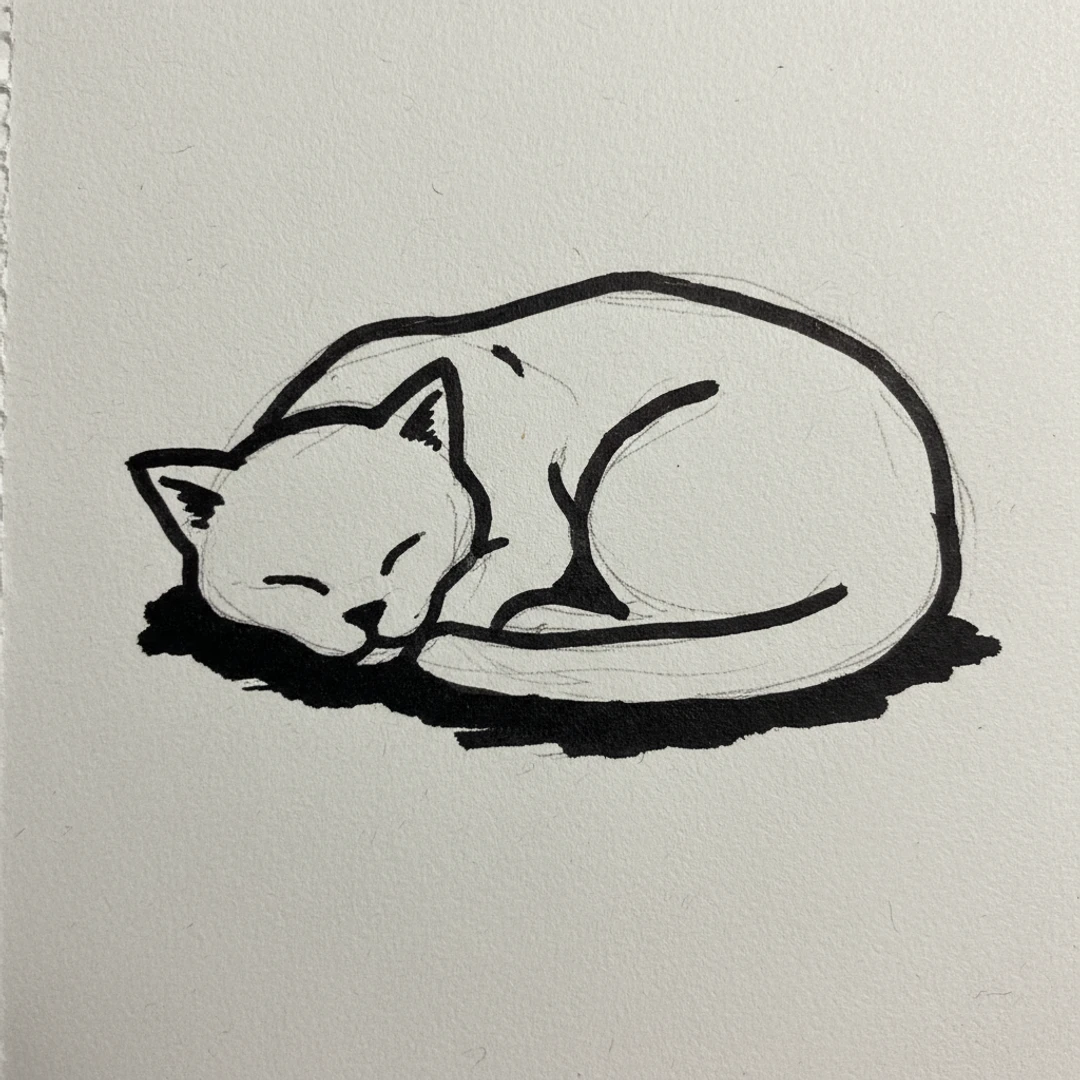
1. Sleeping cat — Draw the curved spine and tucked paws. Cats in this position are basically a circle with details — perfect for practicing organic shapes.
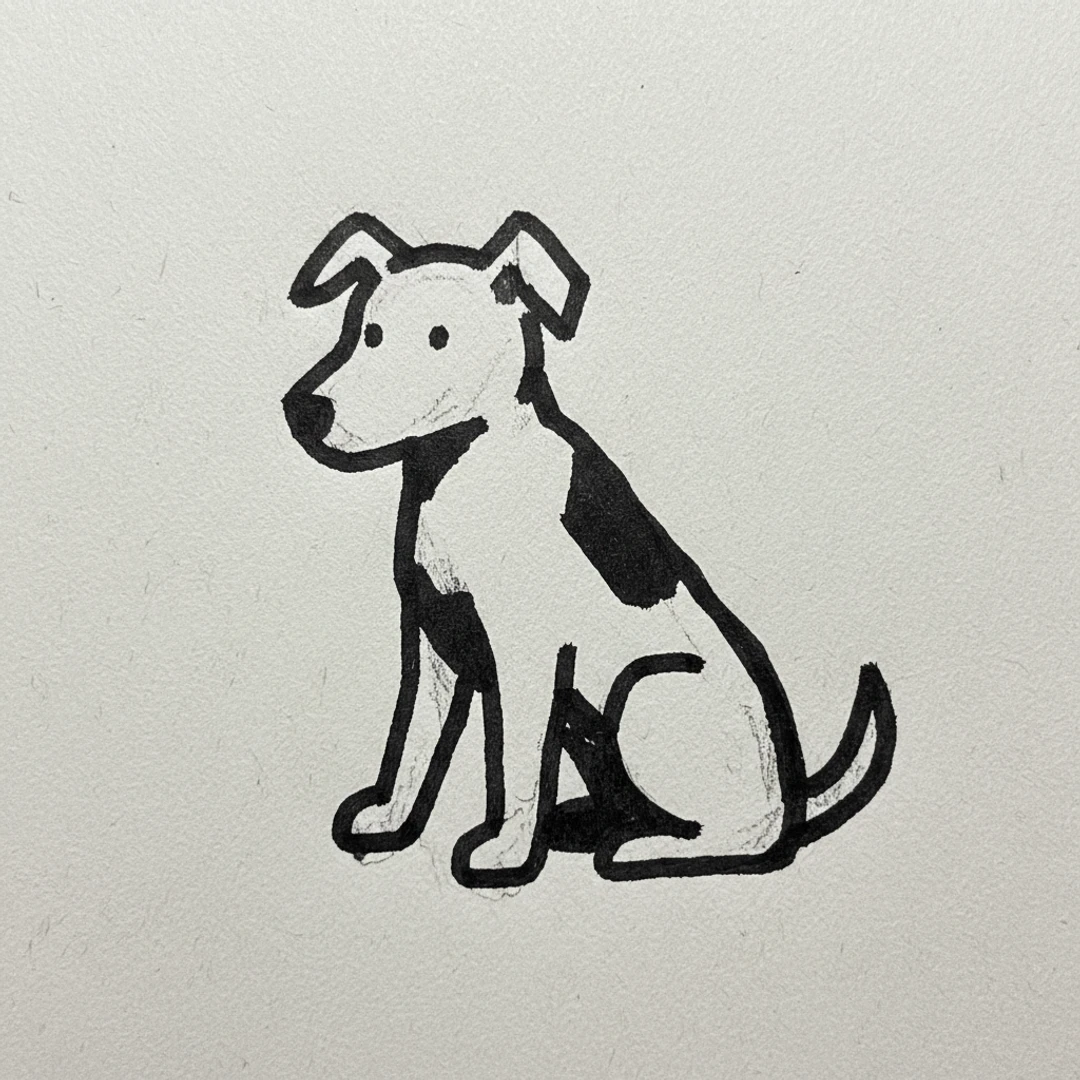
2. Sitting dog — Focus on the head first: two circles (head and snout), floppy ears, simple dot eyes. The body can stay minimal.
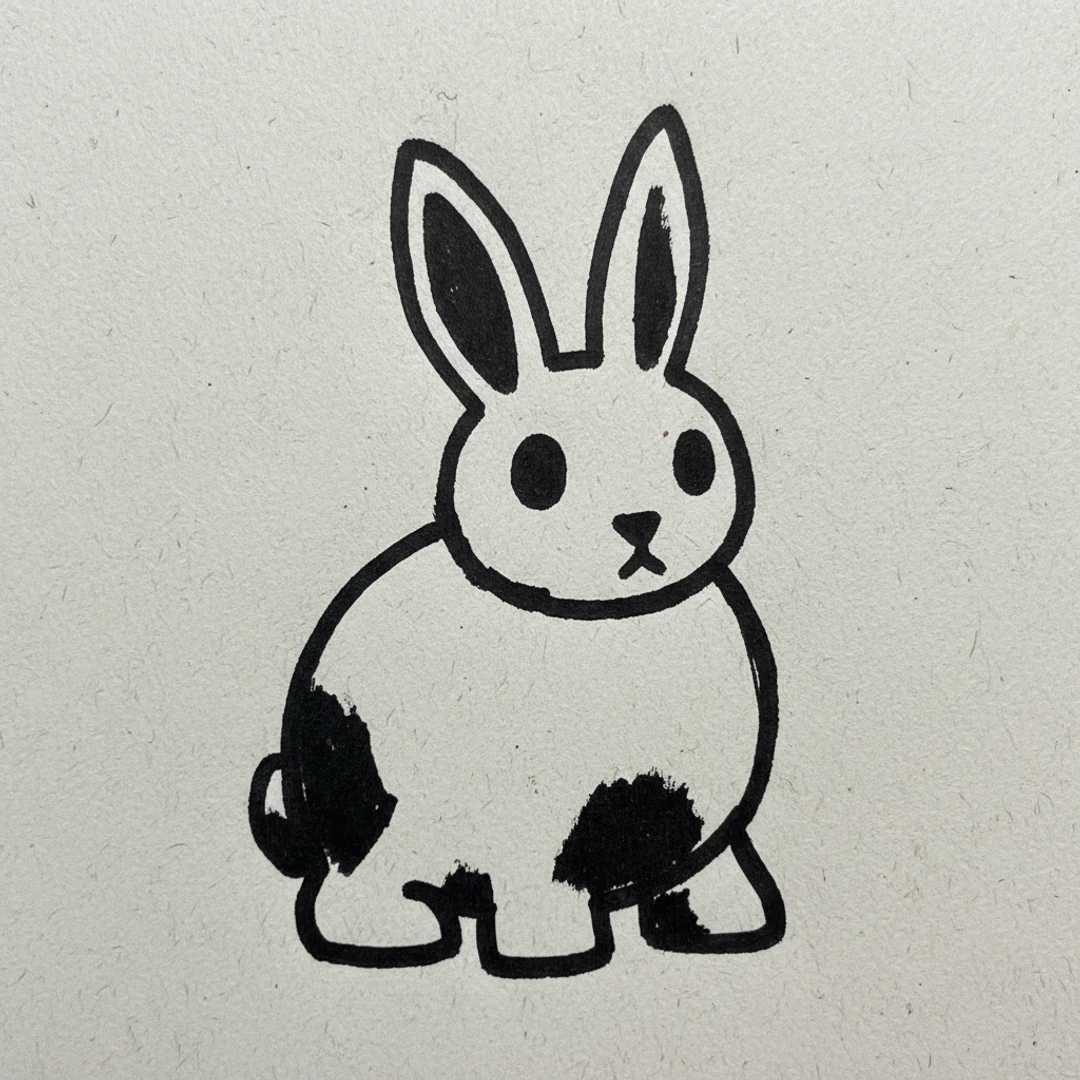
3. Cartoon rabbit — Two long ovals for ears, a round head, simple body. Add a tiny cotton tail and you're done.
4. Small bird on a branch — A teardrop shape for the body, a tiny beak, and a twig underneath. One of the fastest satisfying drawings you can do.
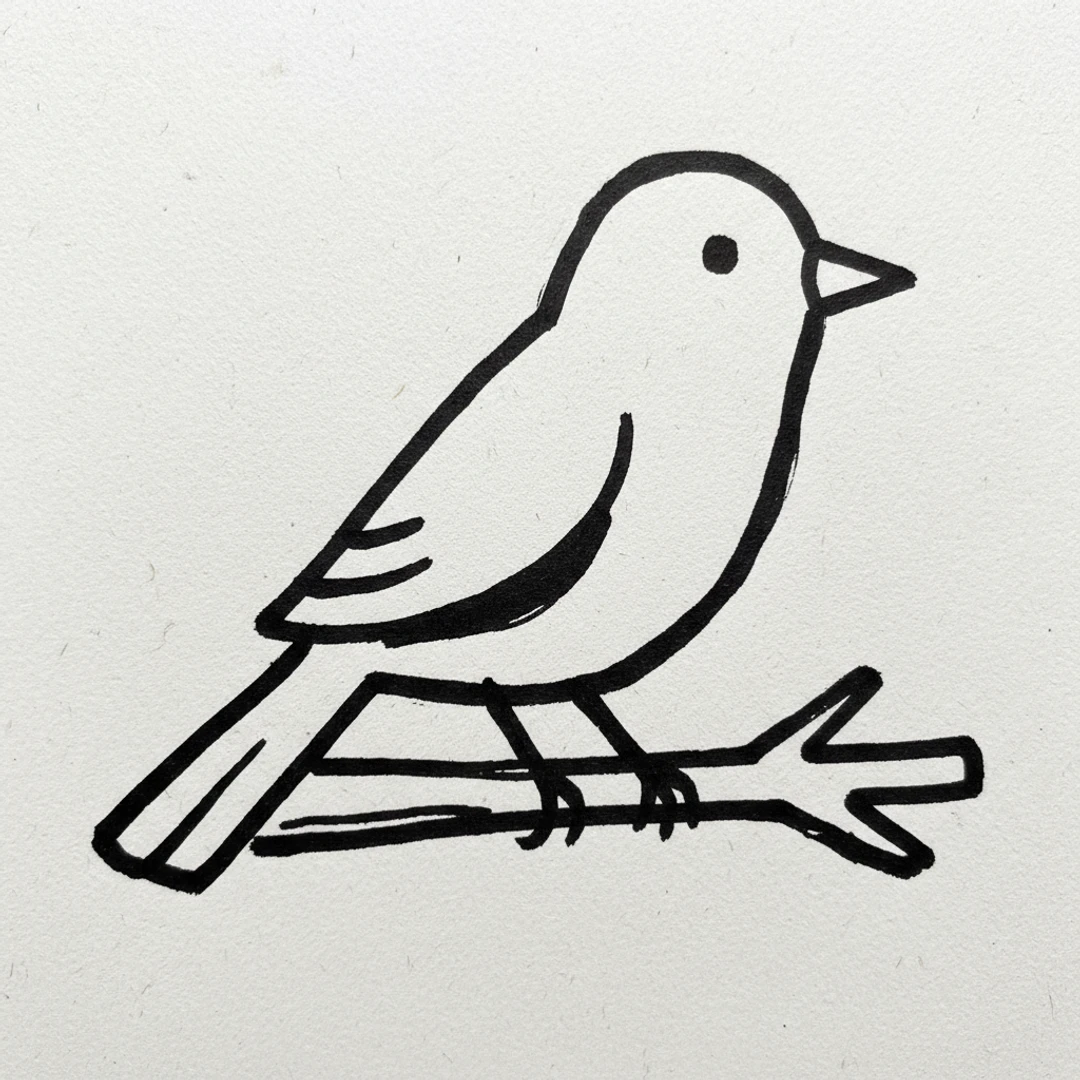
5. Goldfish — A simple oval body with a flowing tail. Great for experimenting with light pencil shading on the scales.
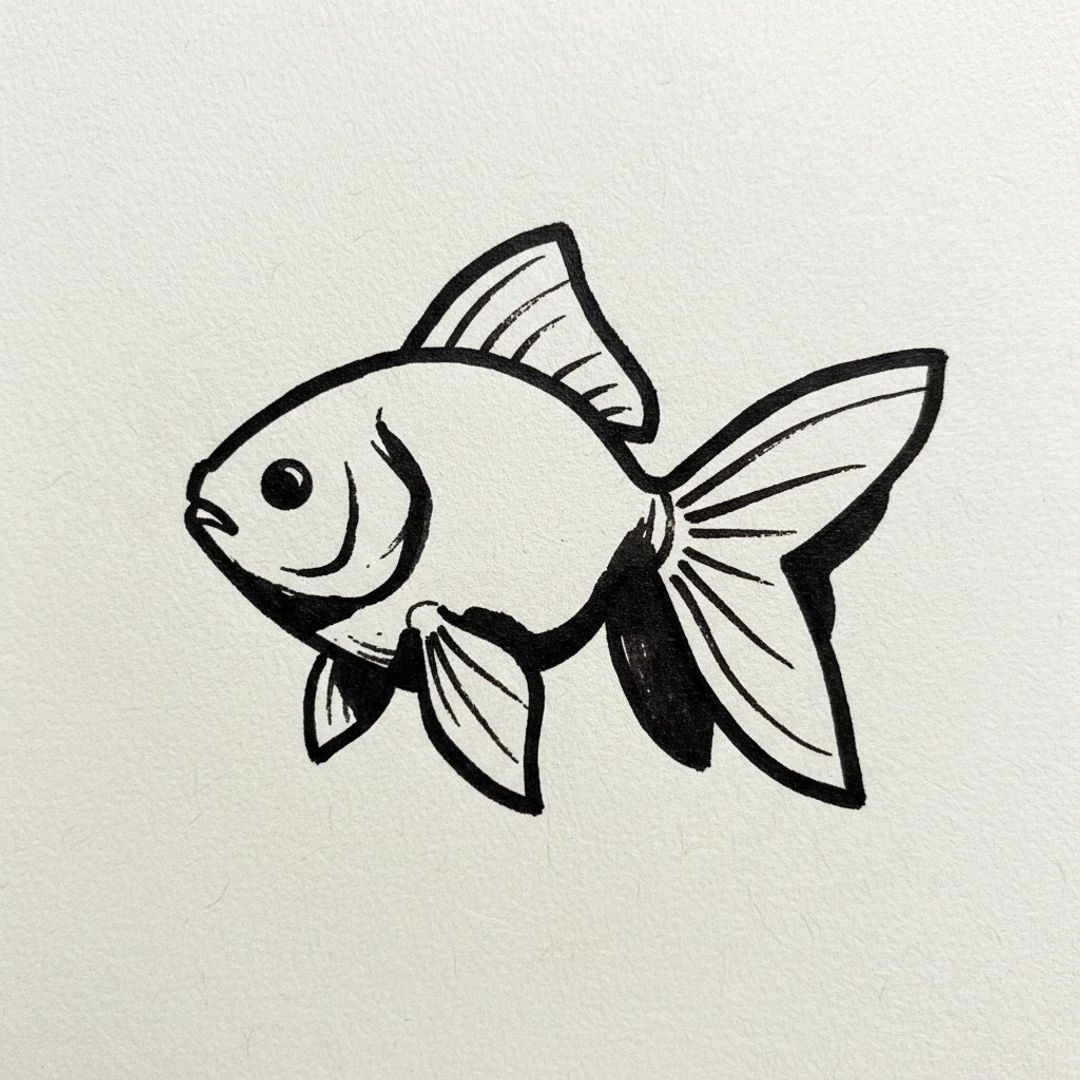
6. Teddy bear — Circles within circles. Sketch the round head, add two small ear circles, a simple snout, and button eyes.
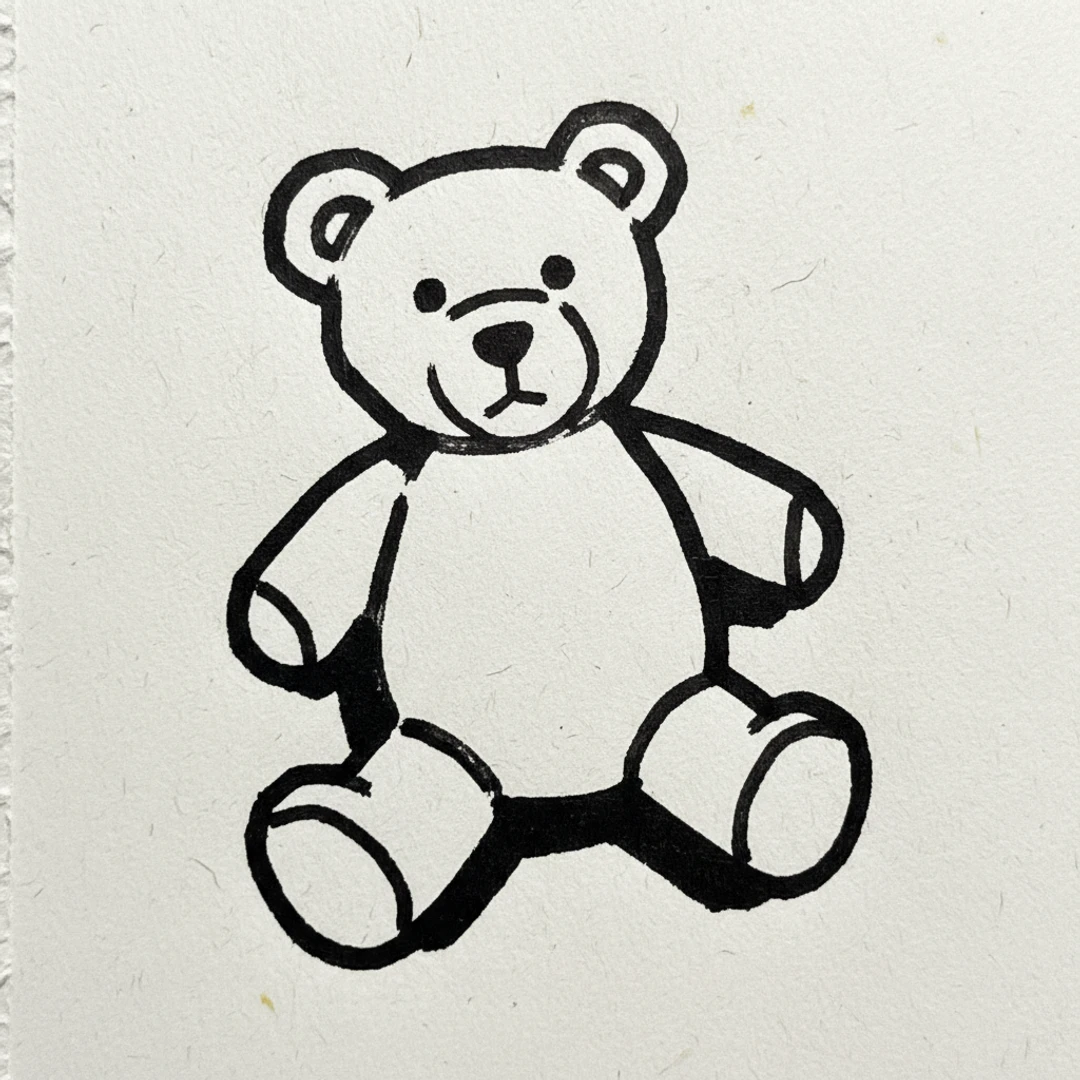
7. Butterfly — Two sets of wing shapes mirrored on each side. The symmetry is actually what makes it easy — draw one side, copy it.
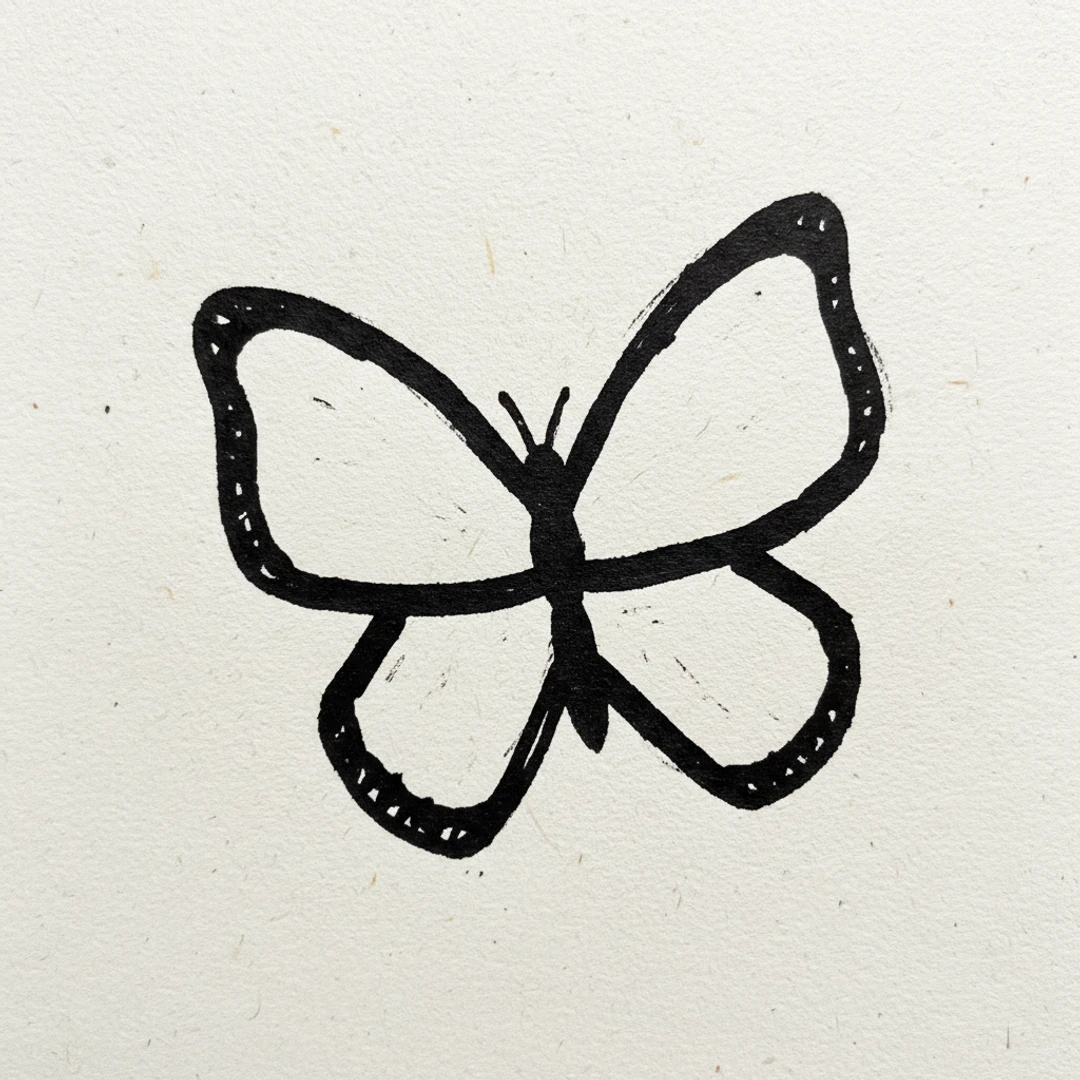
8. Turtle — A domed hexagon shell with four stubby legs peeking out. Add a tiny head on a short neck.

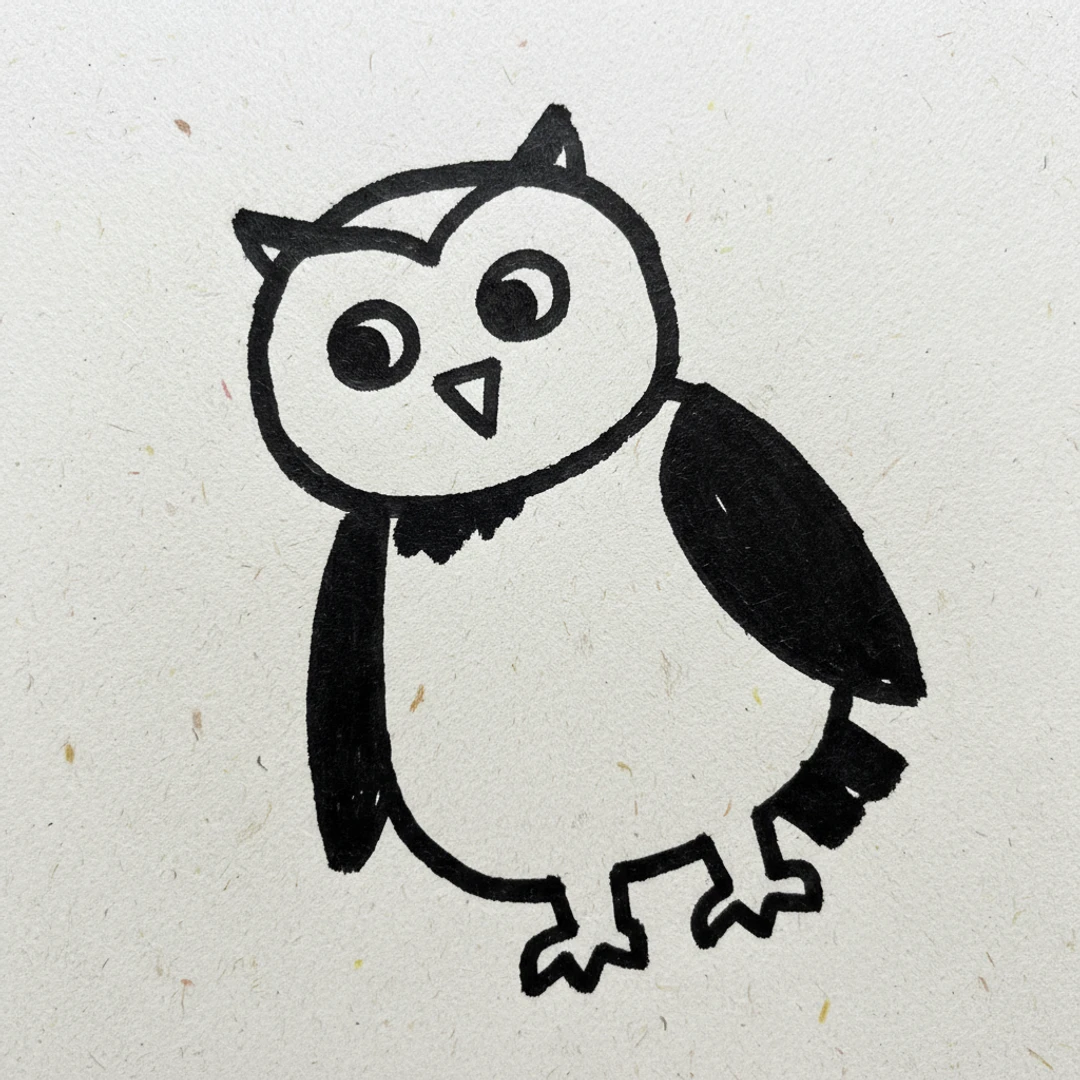
9. Owl — Two big circles for the eyes dominating a round face. Owls are basically eyes with a body.
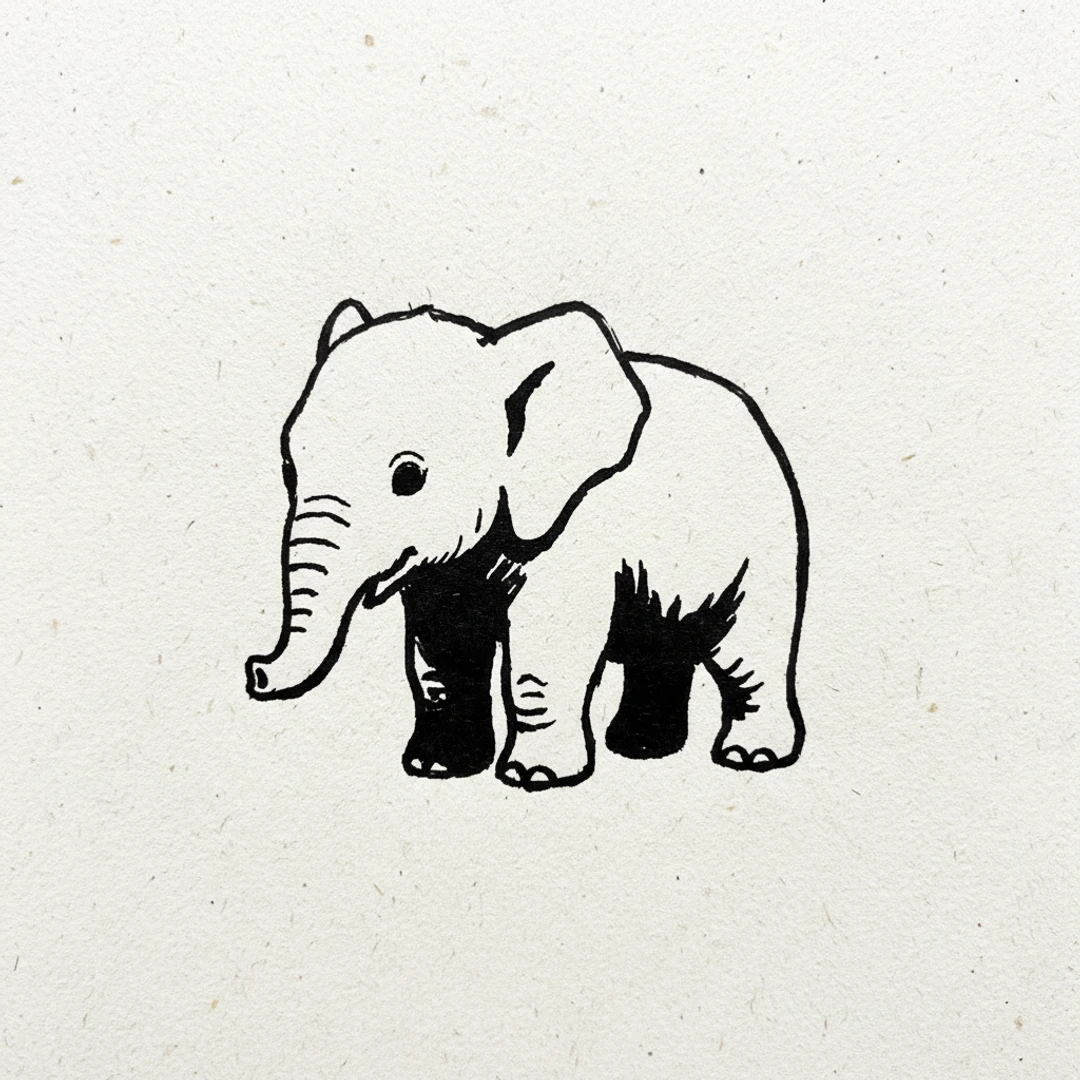
10. Baby elephant — Round head, large floppy ears, a curled trunk, and stubby legs. The chubbier the proportions, the cuter it gets.
Easy Nature Drawing Ideas
Nature is endlessly patient and endlessly varied — and unlike drawing people, there's no "wrong" way for a leaf or cloud to look. Nature is where most beginner artists find their groove.
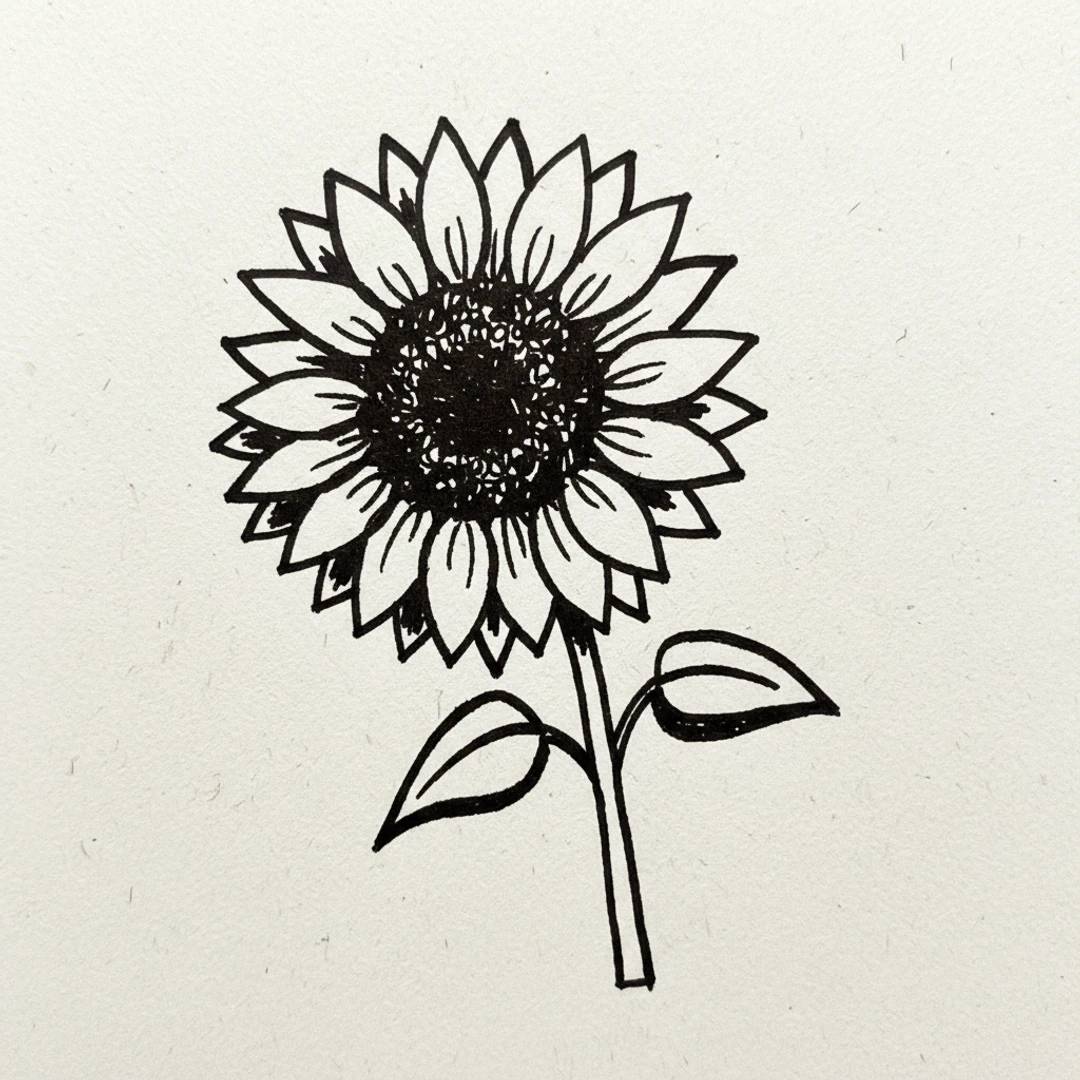
11. Sunflower — A circle in the center, then petals radiating out like sun rays. The imperfect ones look the most natural.
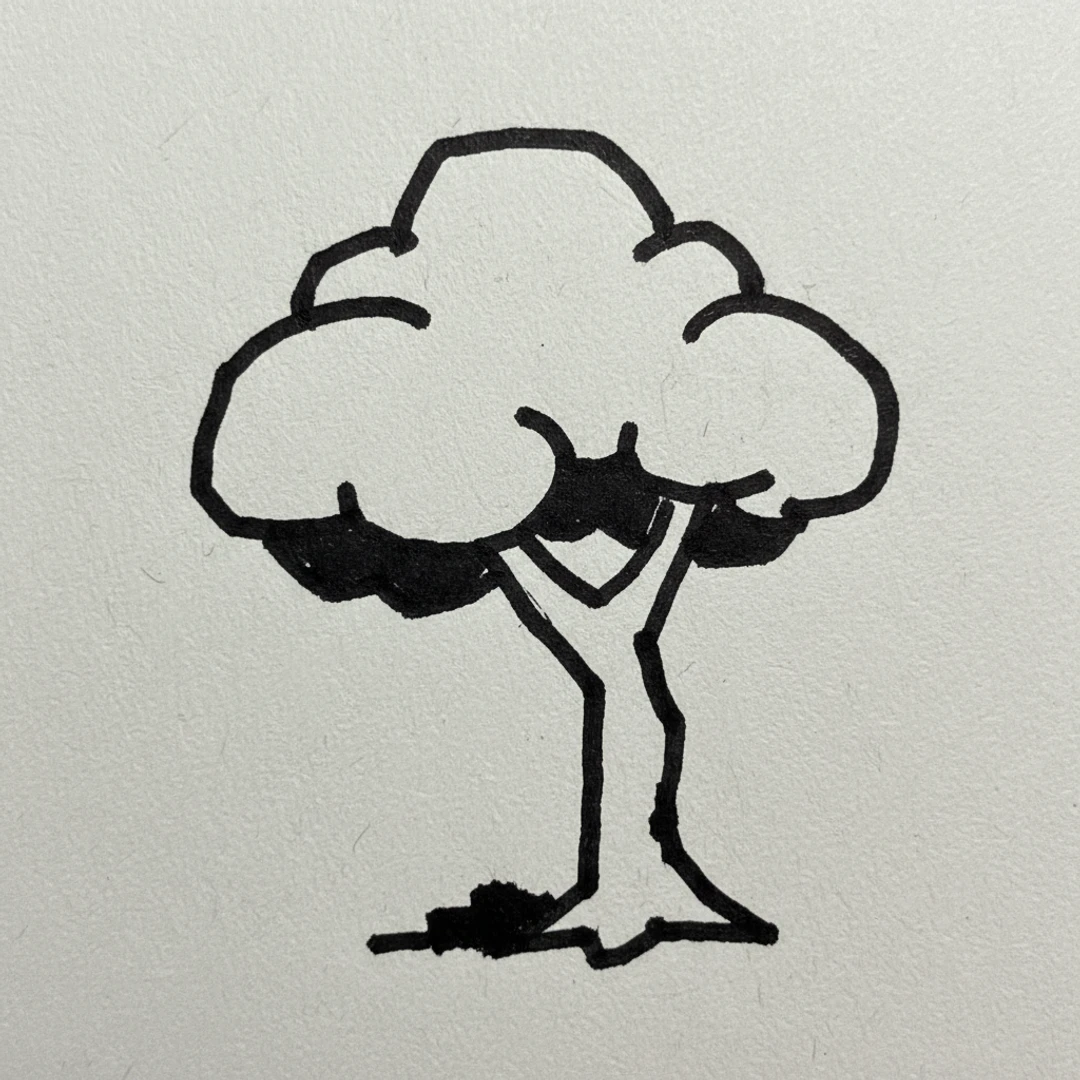
12. Simple tree — A Y-shape trunk branching into two or three more branches, then a loose cloud of leaves on top.
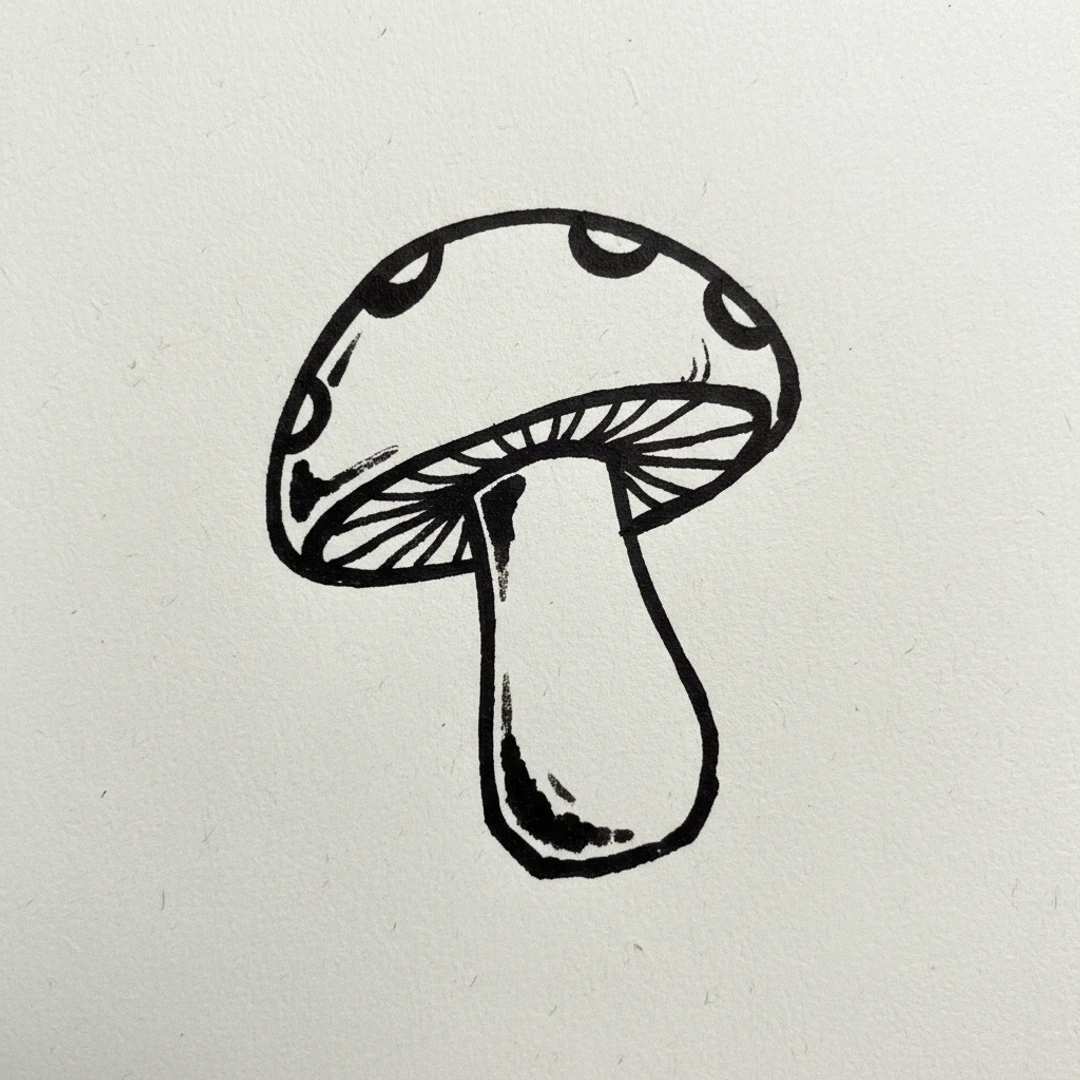
13. Mushroom — A dome cap on a short stem. Add some dots on the cap and a curved line underneath for the gills. Iconic, easy, satisfying.
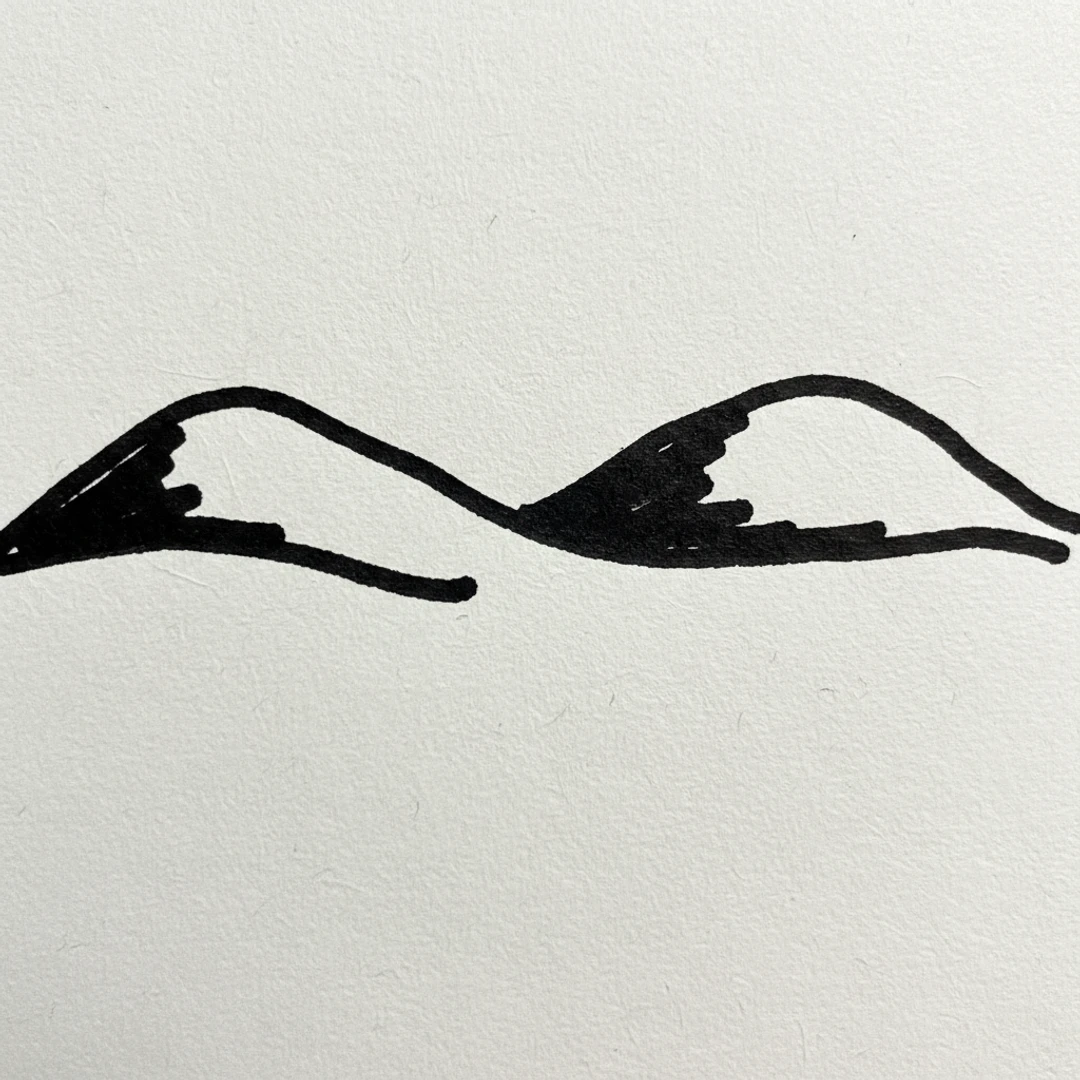
14. Rolling hills landscape — Overlapping curved lines to suggest distance, a simple horizon, maybe a sun in the corner. A great composition exercise.
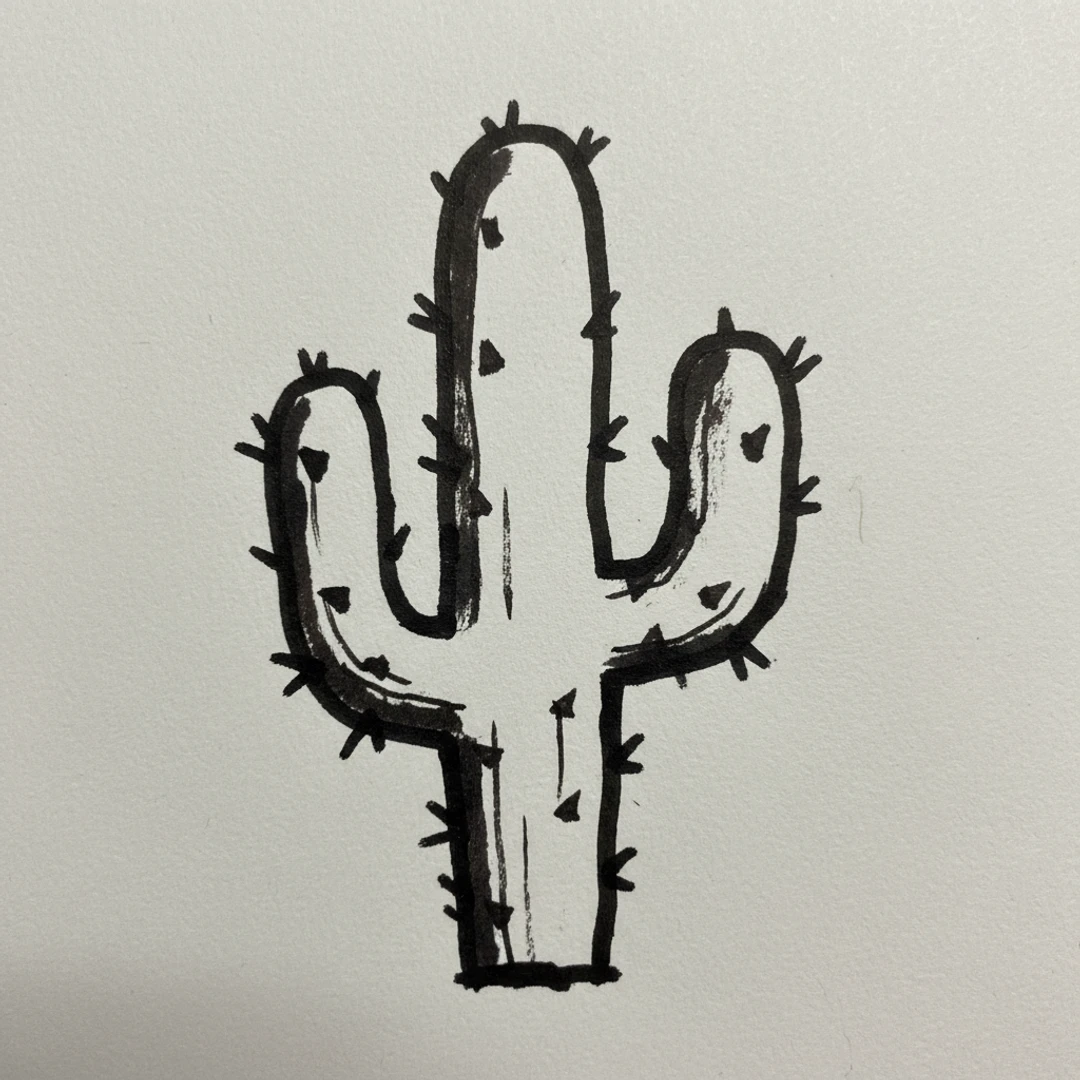
16. Cactus — A thick vertical rectangle with two smaller arms branching off. Add a few short horizontal lines for the spines.
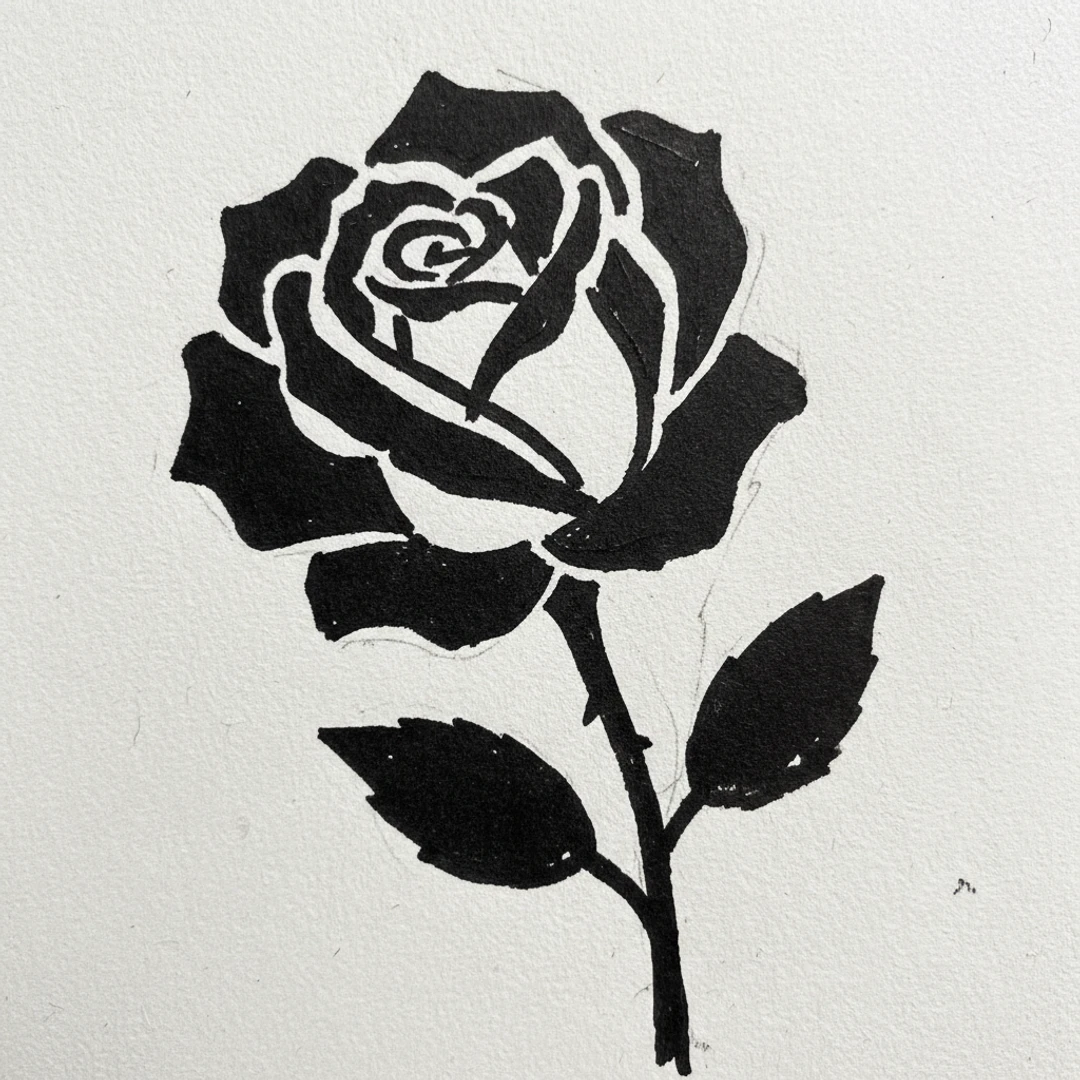
17. Rose (simplified) — Start with a small spiral in the center, then add curved petals wrapping around it like a loose snail shell. This one takes 5 minutes to learn and always impresses.
18. Raindrop — A teardrop shape with a white highlight line on one side. Simple but beautiful in a cluster.
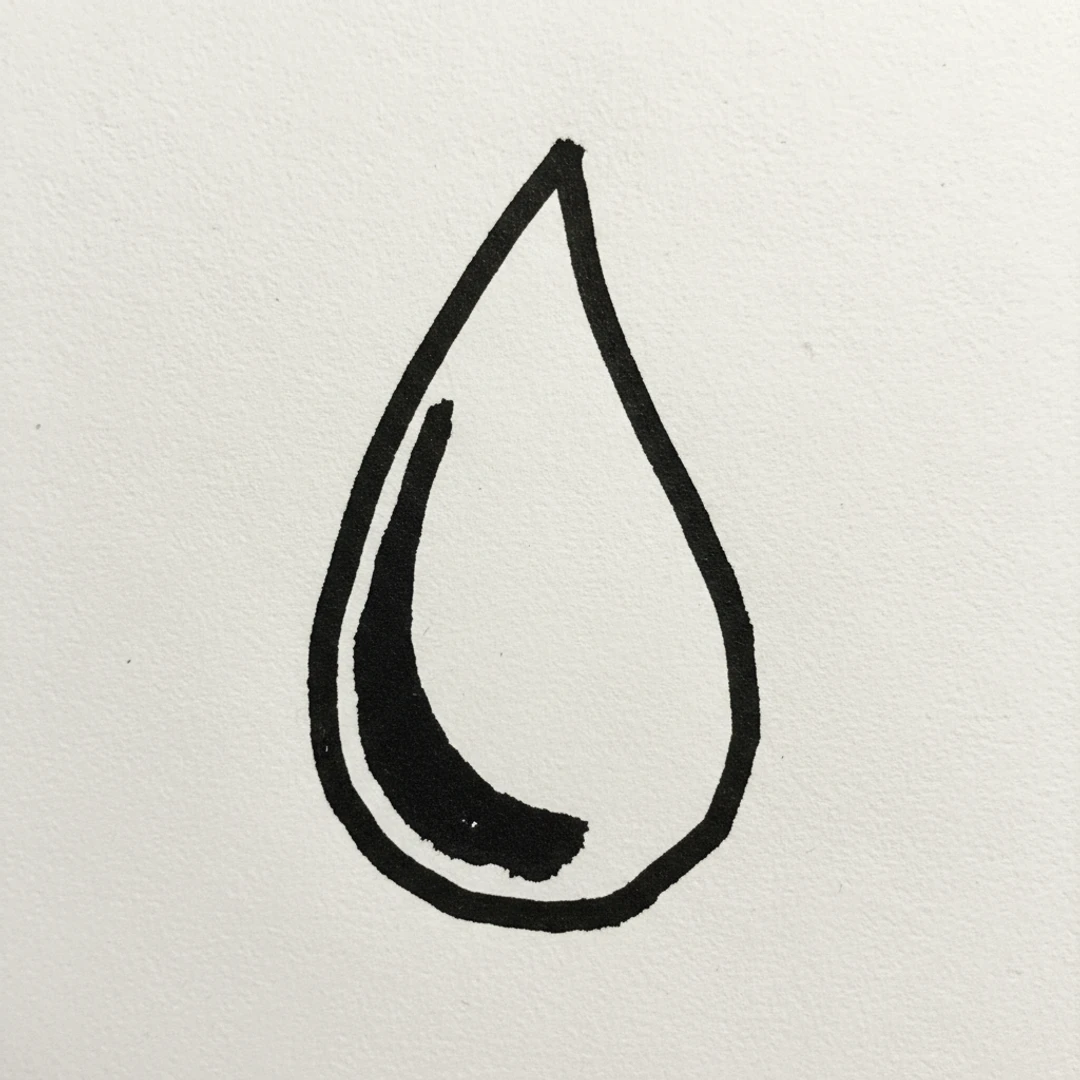
19. Wave — A curved horizontal line with a curling crest on top and a few horizontal lines below for the water surface.
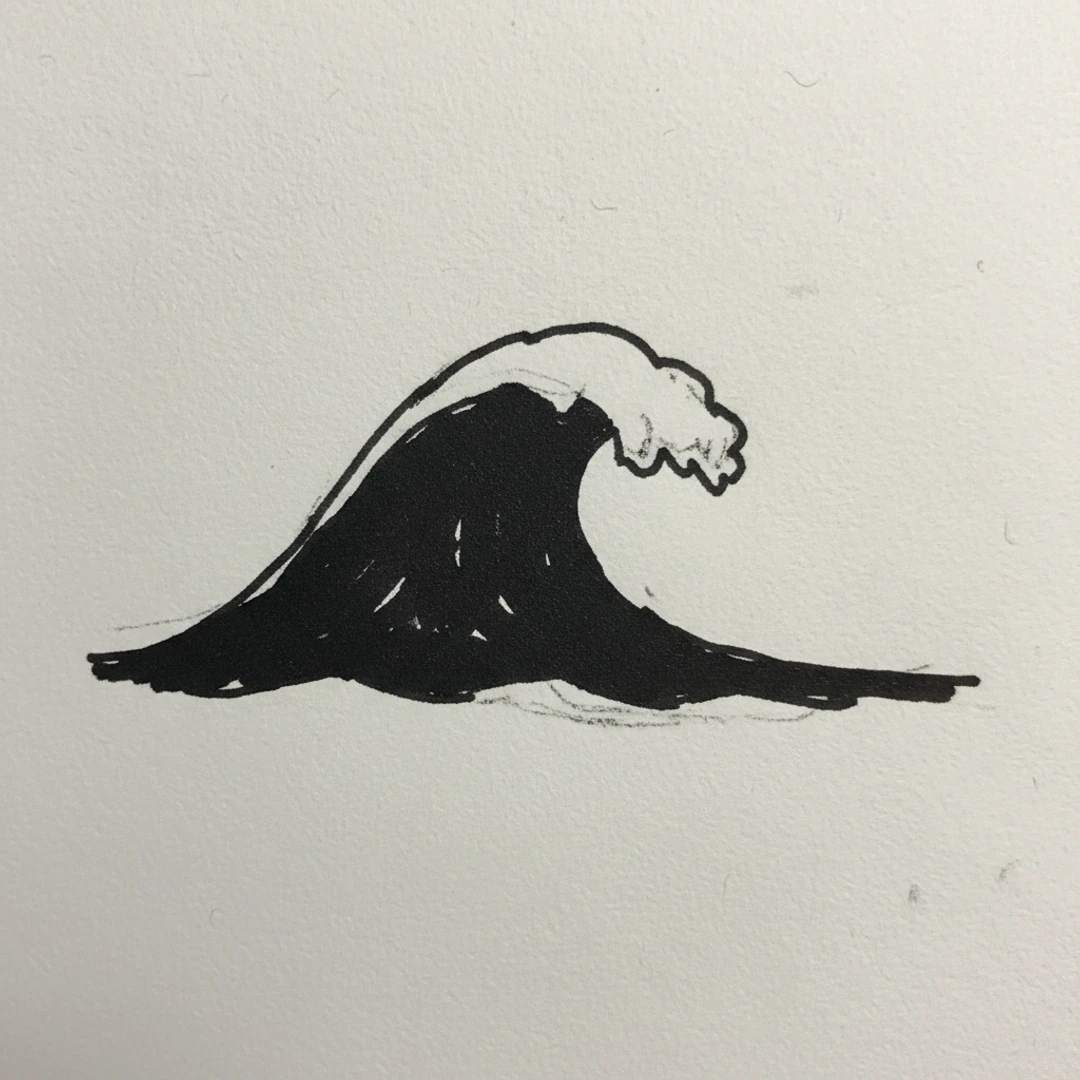
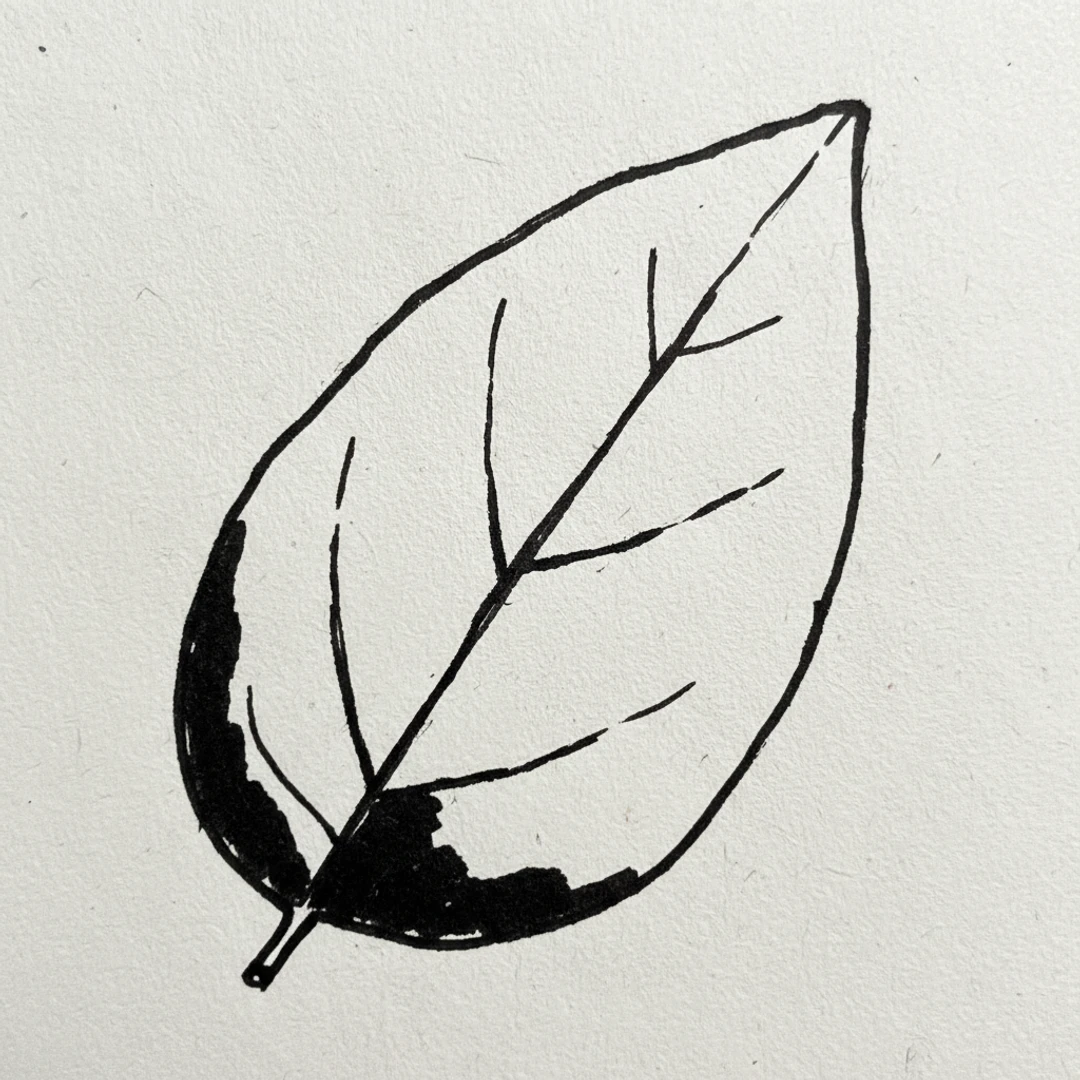
20. Leaf with veins — Draw any leaf silhouette, then add a central vein and smaller veins branching off it. Great for practicing light line work.
Easy Food Drawing Ideas
Food drawings are consistently the most shared type of beginner art — especially on social media. They're simple, colorful, and everyone can relate to them. These work brilliantly in colored pencil or markers.
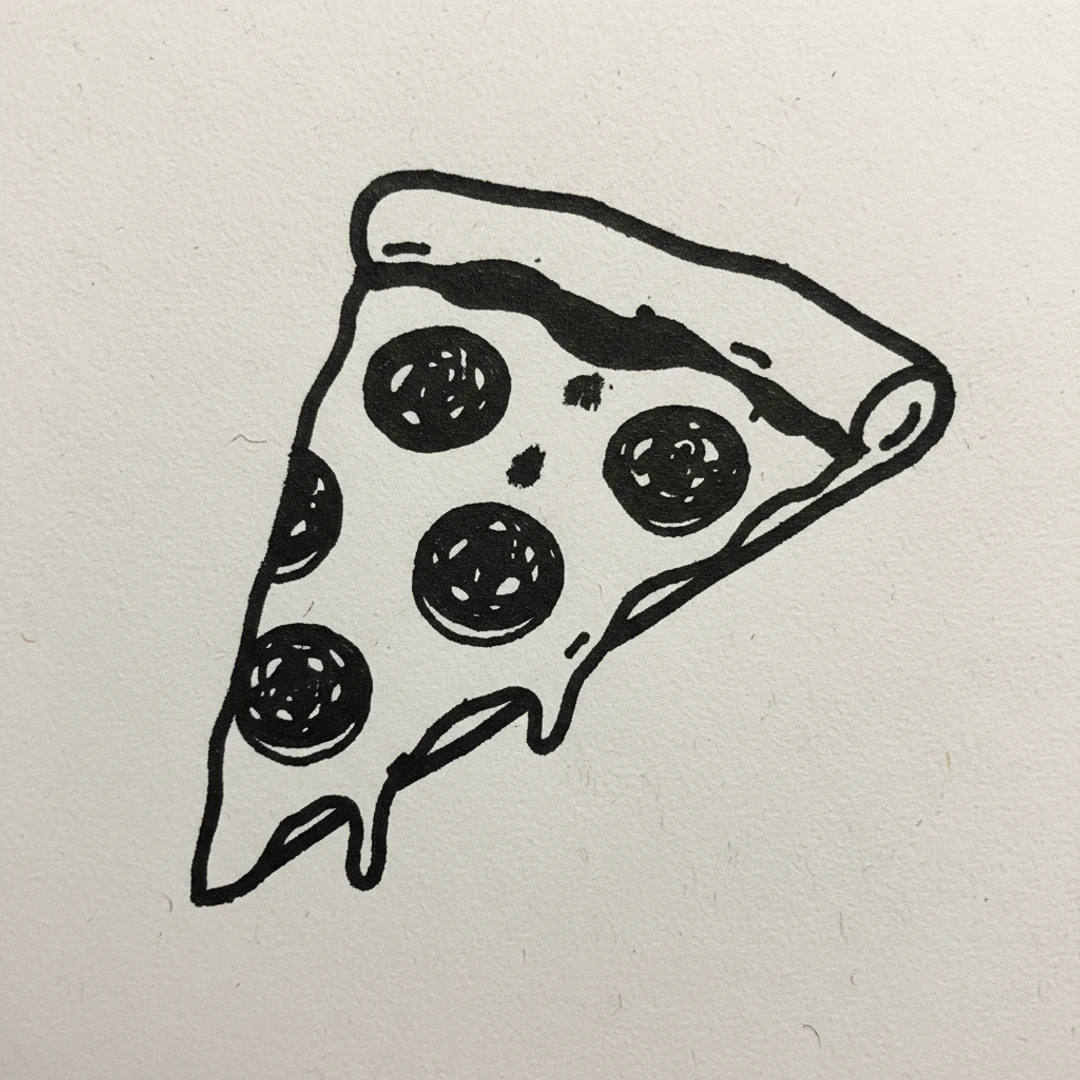
21. Slice of pizza — A triangle with a curved top crust edge and a few circles for pepperoni. Add some wavy cheese lines for texture.
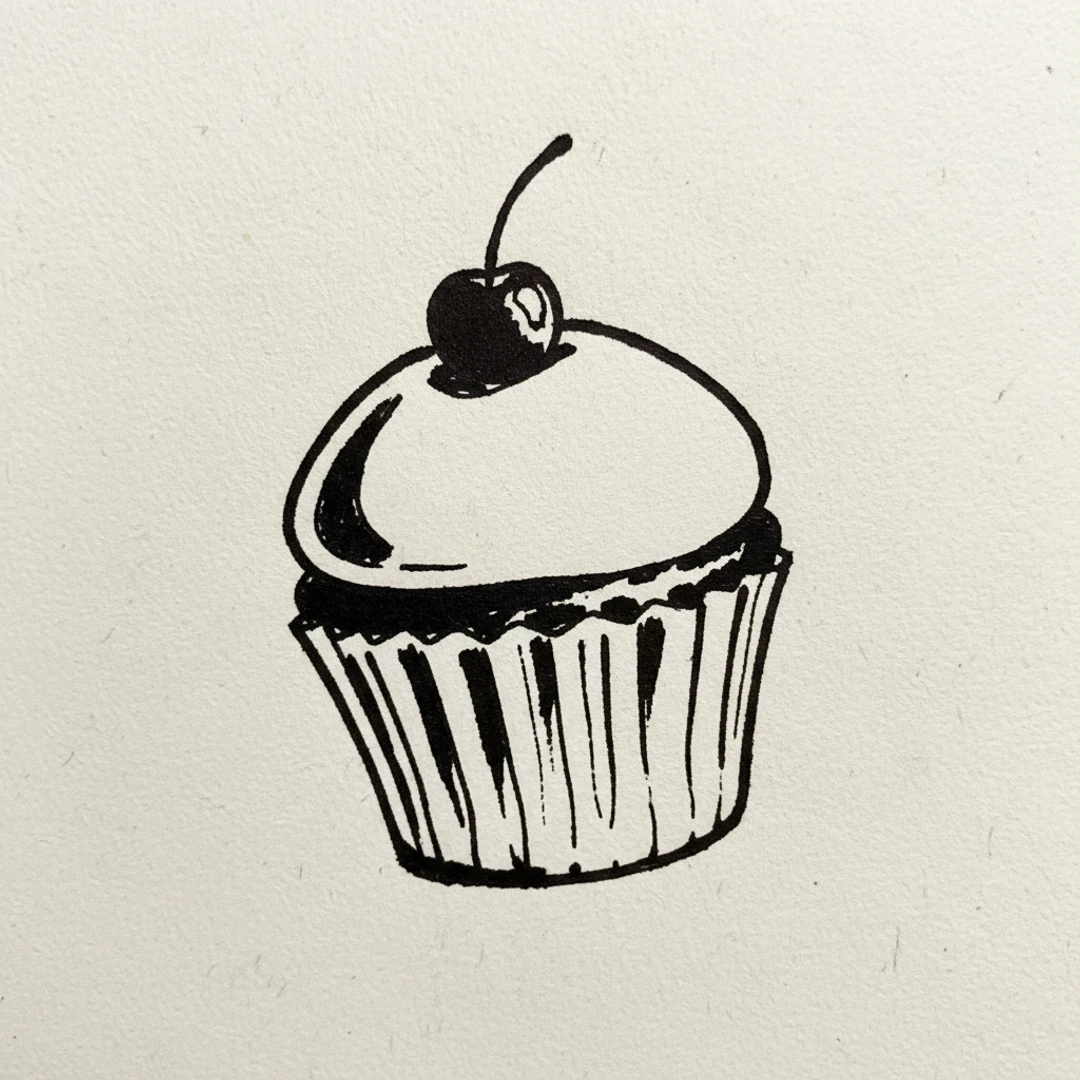
22. Cupcake — A pleated paper cup bottom with a swirled frosting peak on top. Add a cherry or sprinkles for character.
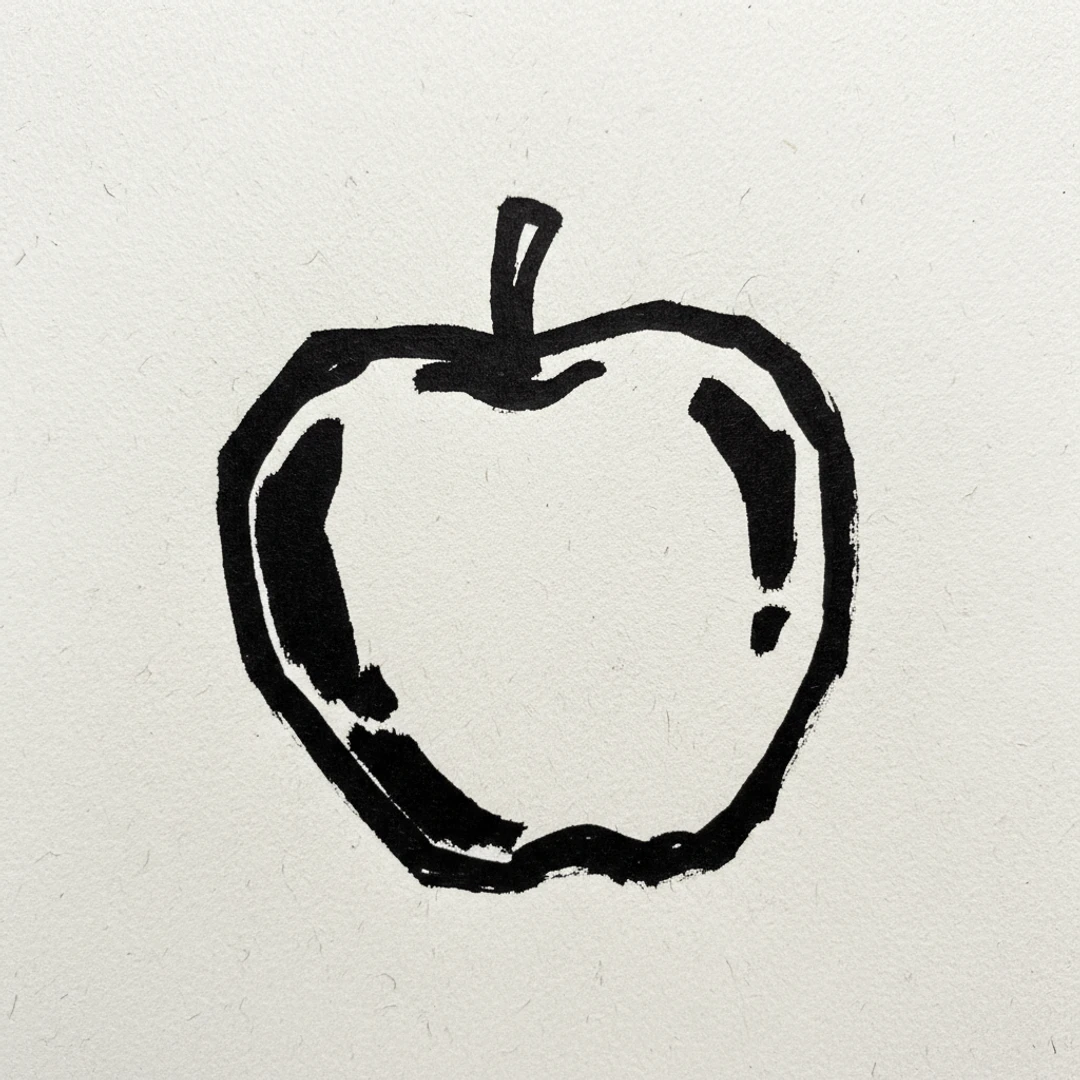
23. Apple — A simple rounded shape with a small indent at the top, a short stem, and one leaf. Classic and satisfying.
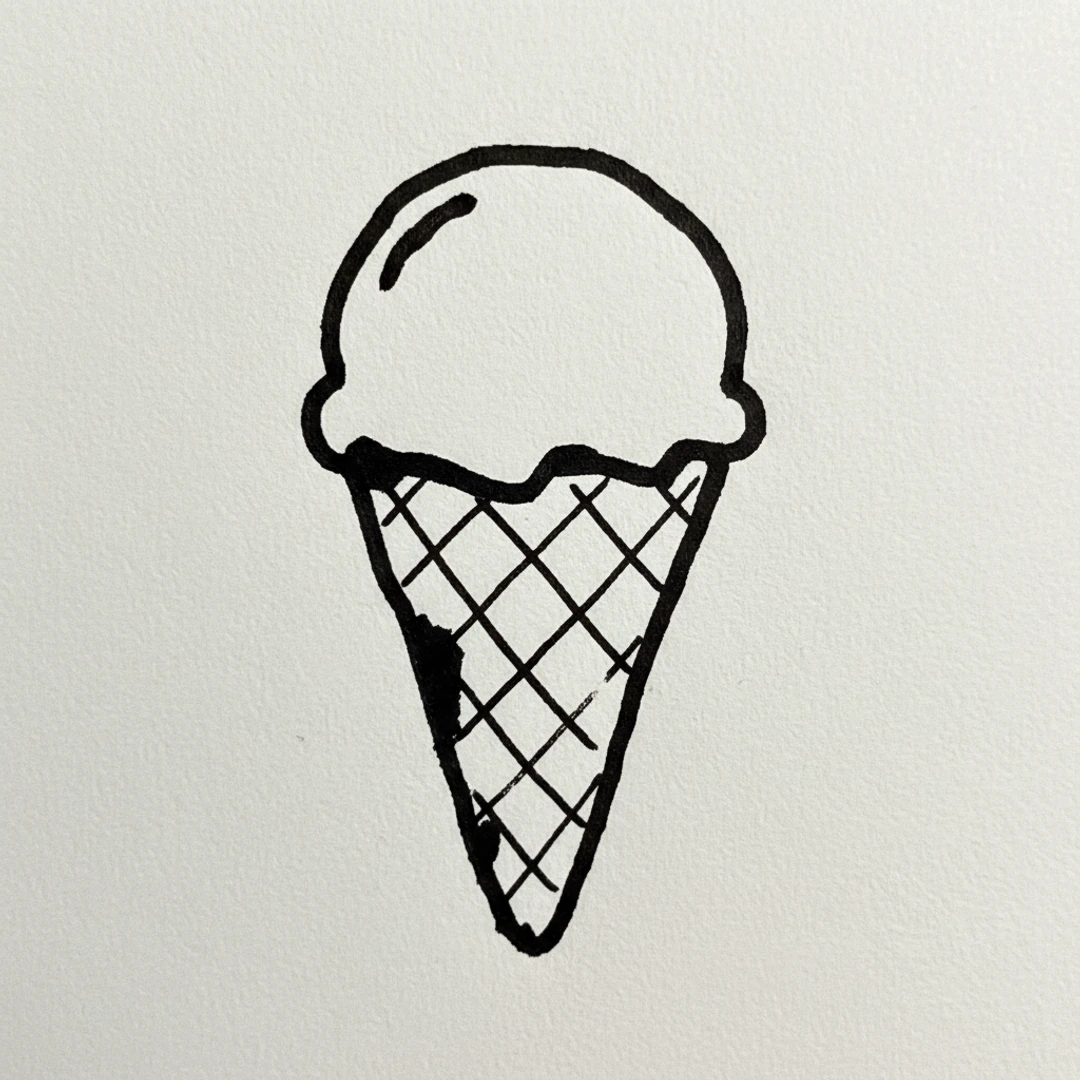
24. Ice cream cone — A triangle cone with a crosshatch grid pattern, then a rounded scoop (or two) on top. Add a small highlight oval on the scoop.
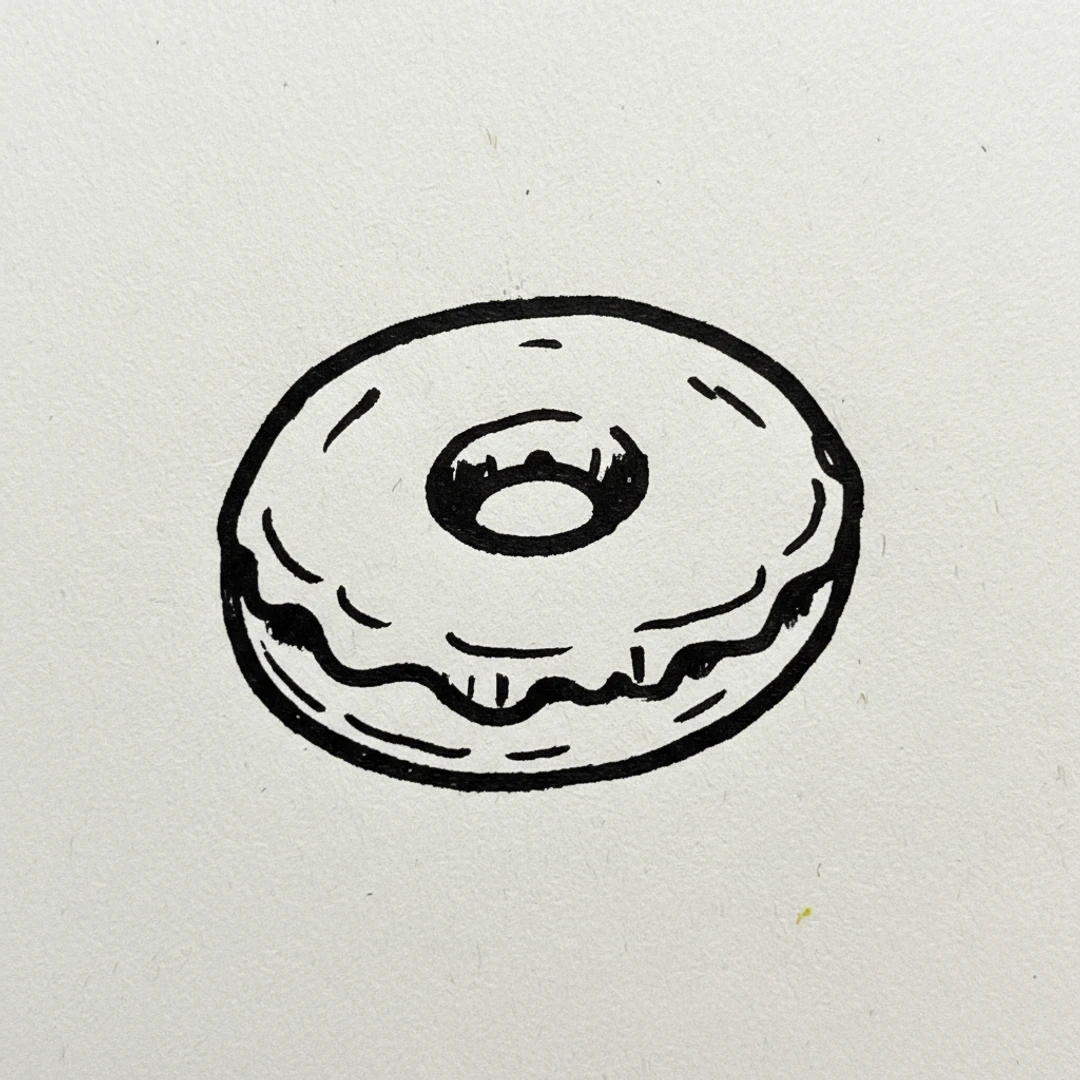
25. Donut — An oval with a smaller oval hole in the center, a wavy icing line across the top, and a few sprinkle dashes.
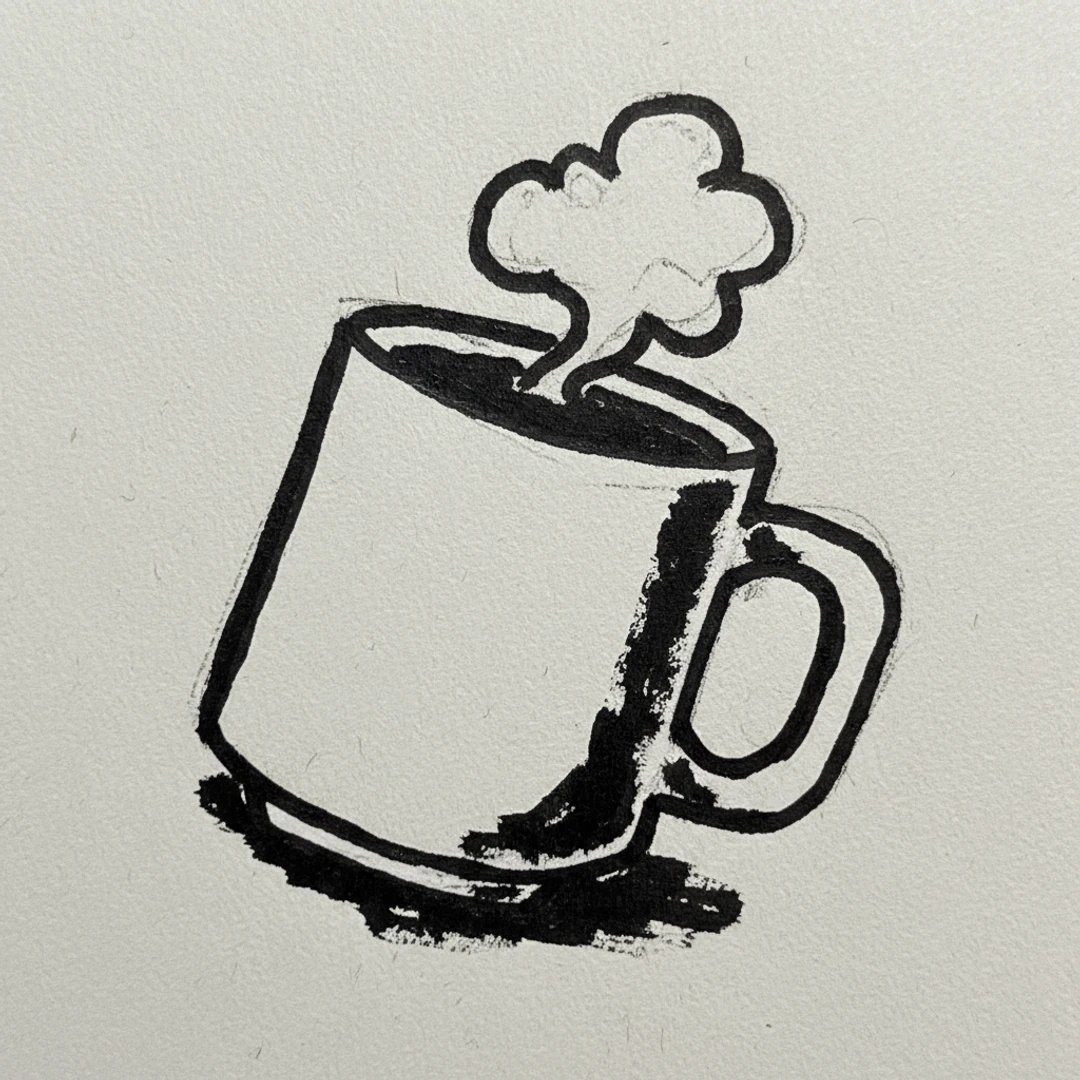
26. Coffee cup — A rectangle with a rounded base, a curved handle on the side, and a small wisp of steam rising from the top.
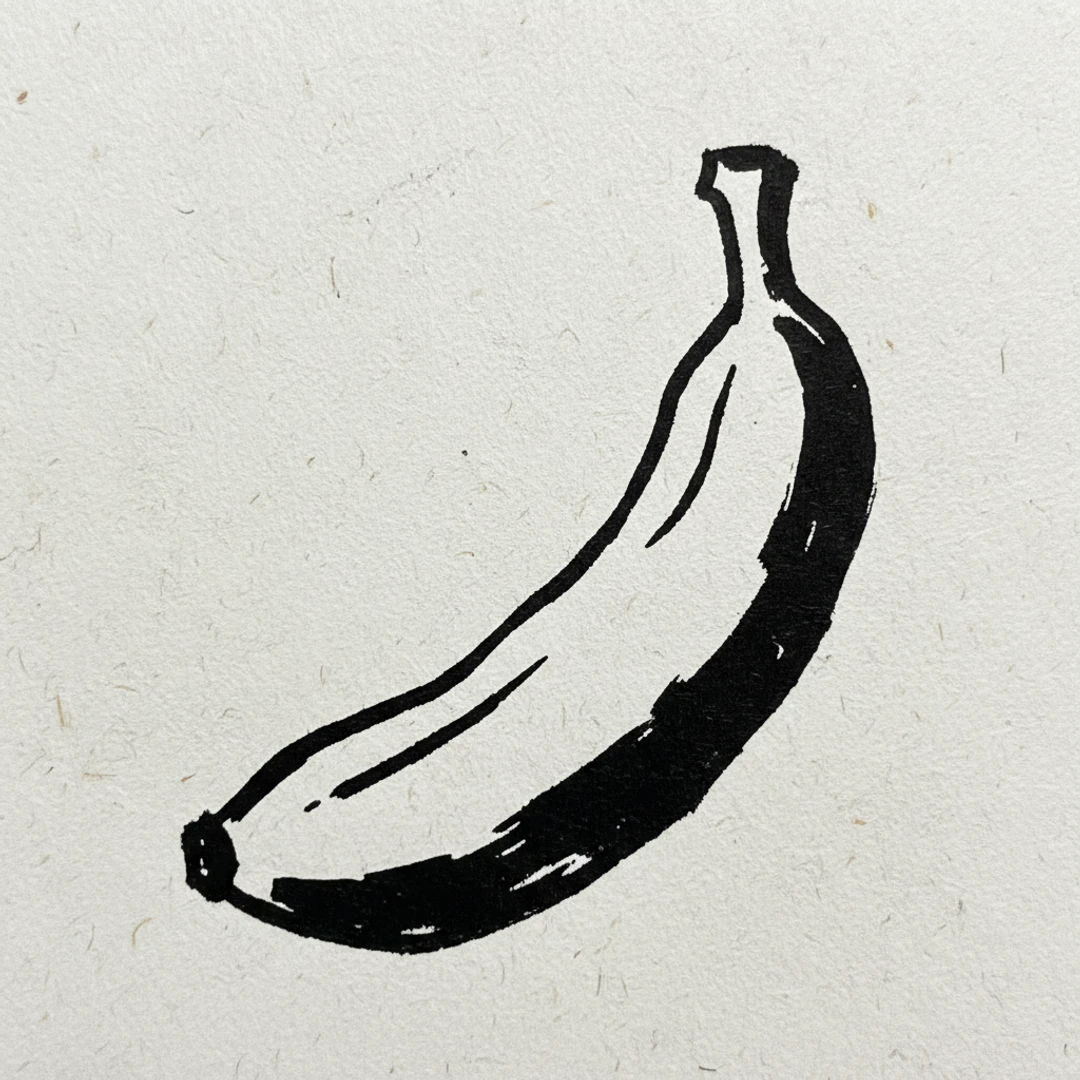
27. Banana — A curved crescent shape with a stem at one end and a small point at the other. Add a few lines along the body for the ridges.
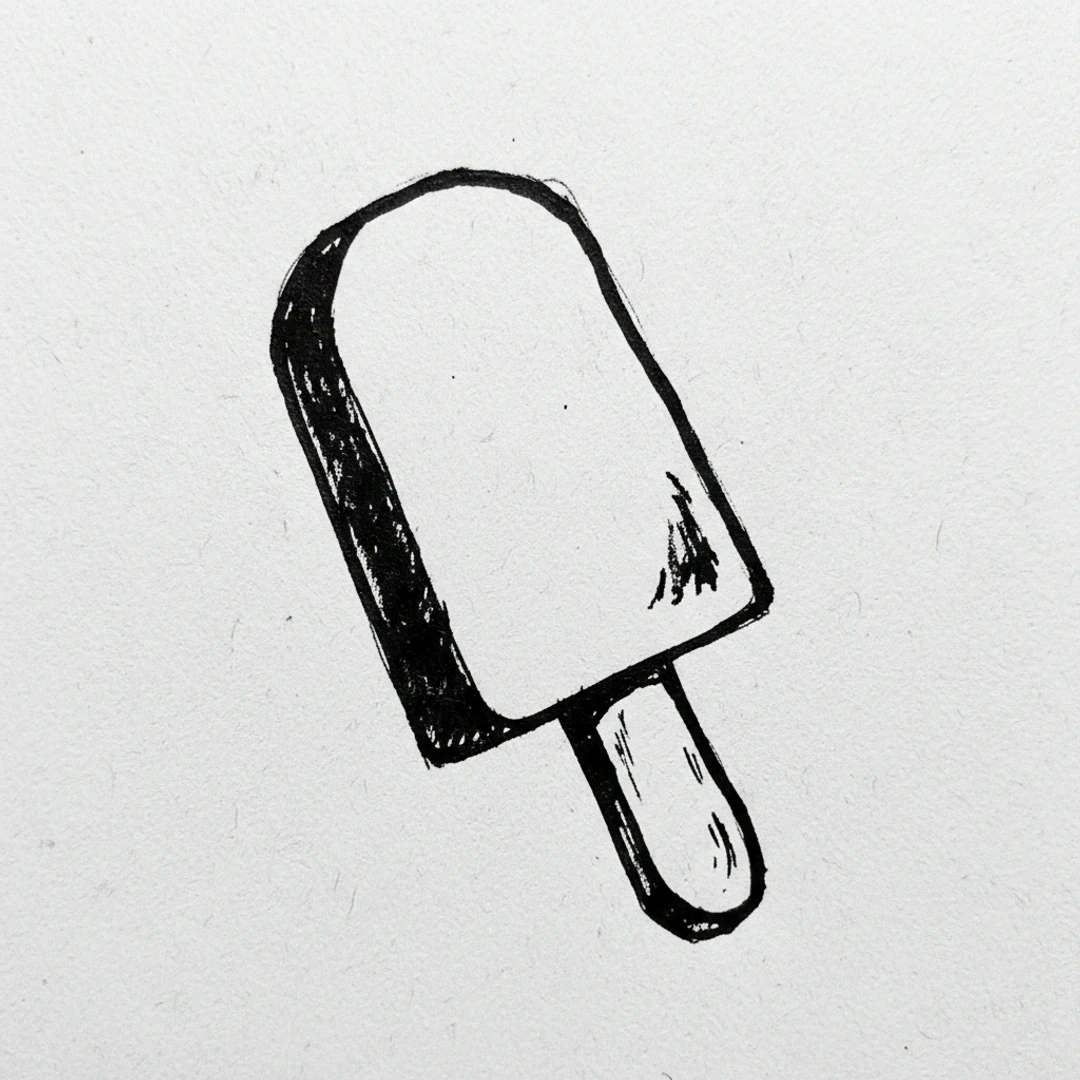
28. Popsicle — A rounded rectangle on a stick. Add drip marks down the sides for a summery melting effect.
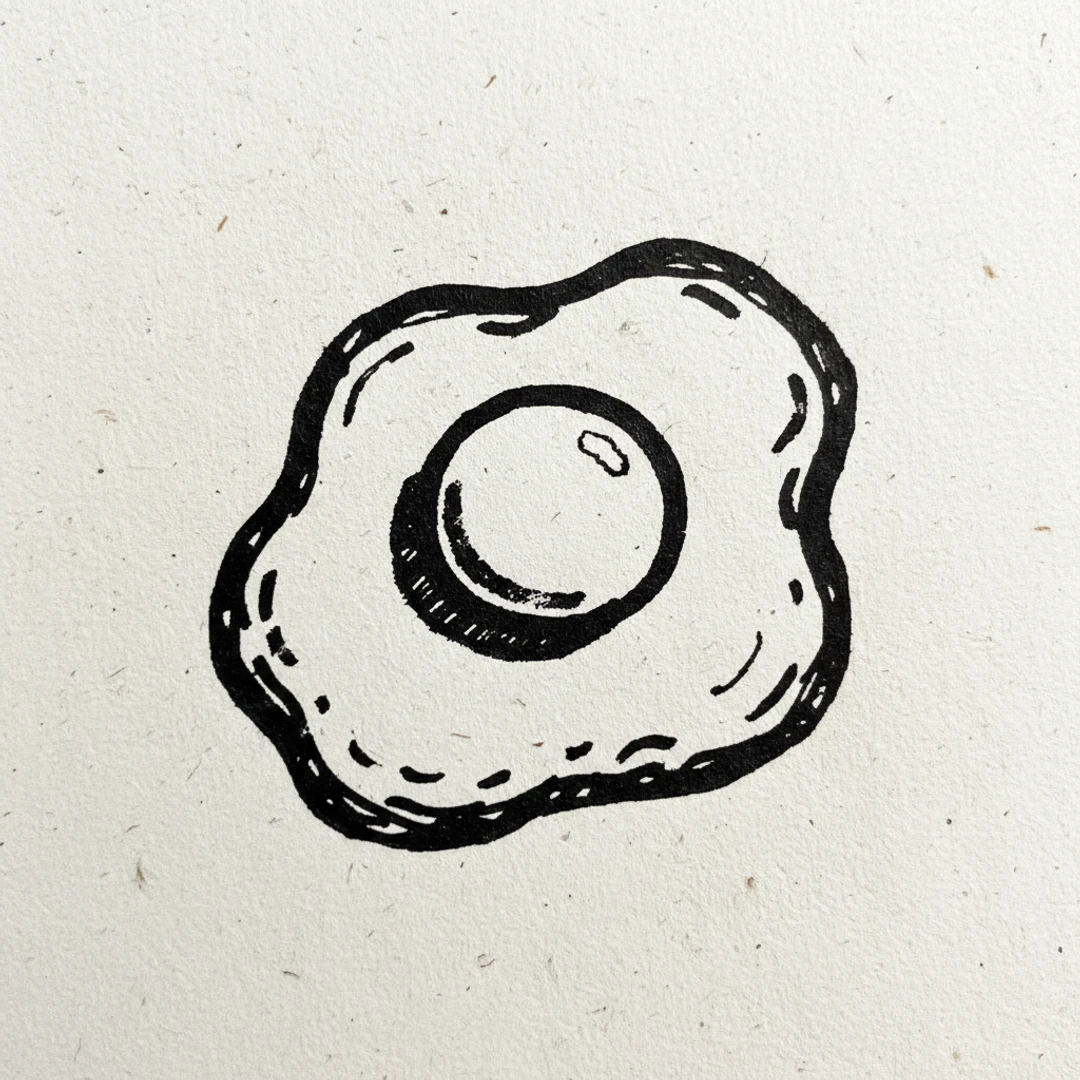
29. Fried egg — An irregular blob for the white with a perfect circle yolk in the center. The imperfect edges make it look more realistic.
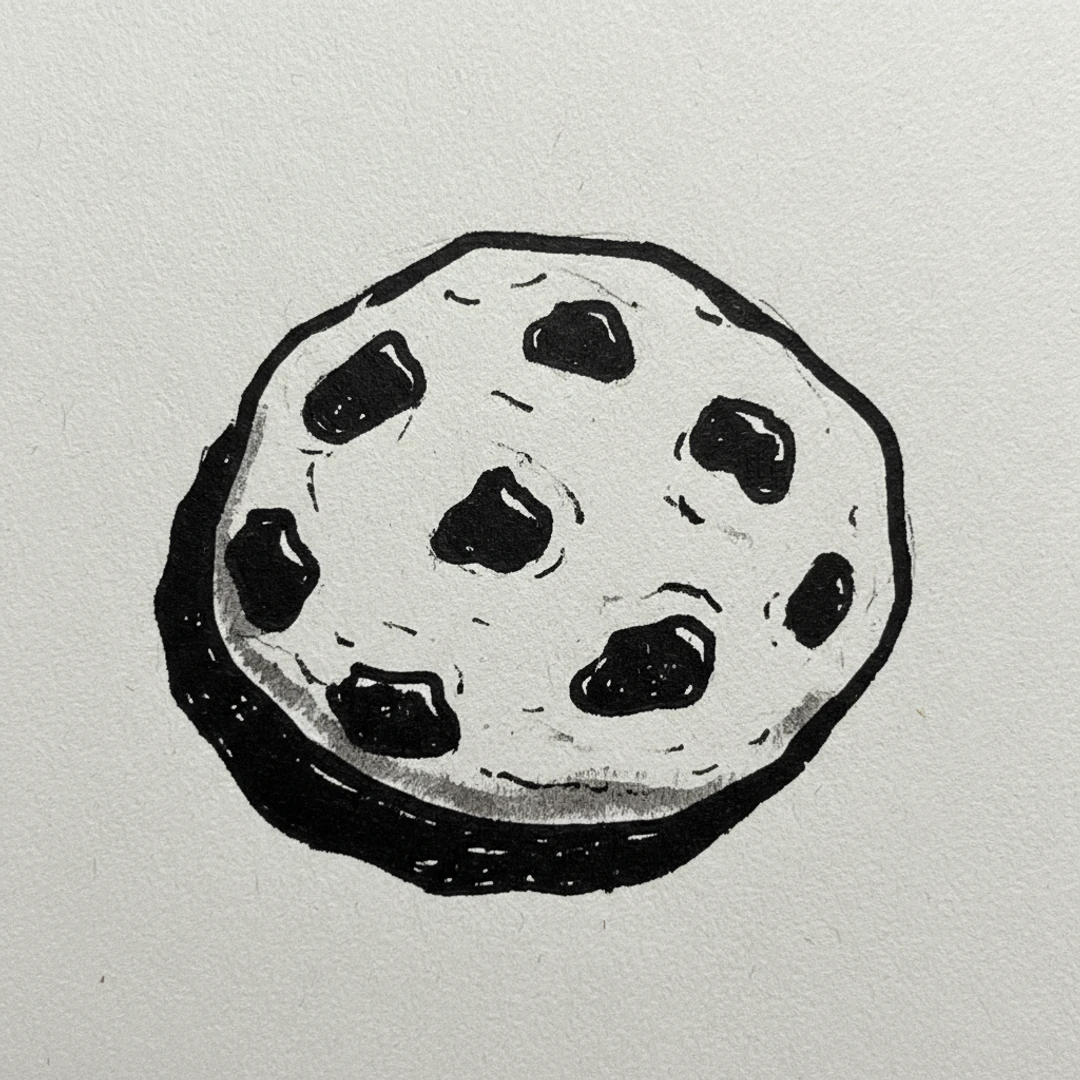
30. Cookie — A rough circle with small oval chocolate chips scattered across the surface. Add a bite taken out for extra personality.
Easy Object Drawing Ideas
The objects around you right now are some of the best drawing subjects available. Observational drawing — drawing from real life — is one of the fastest ways to improve, and everyday objects are the perfect starting point.
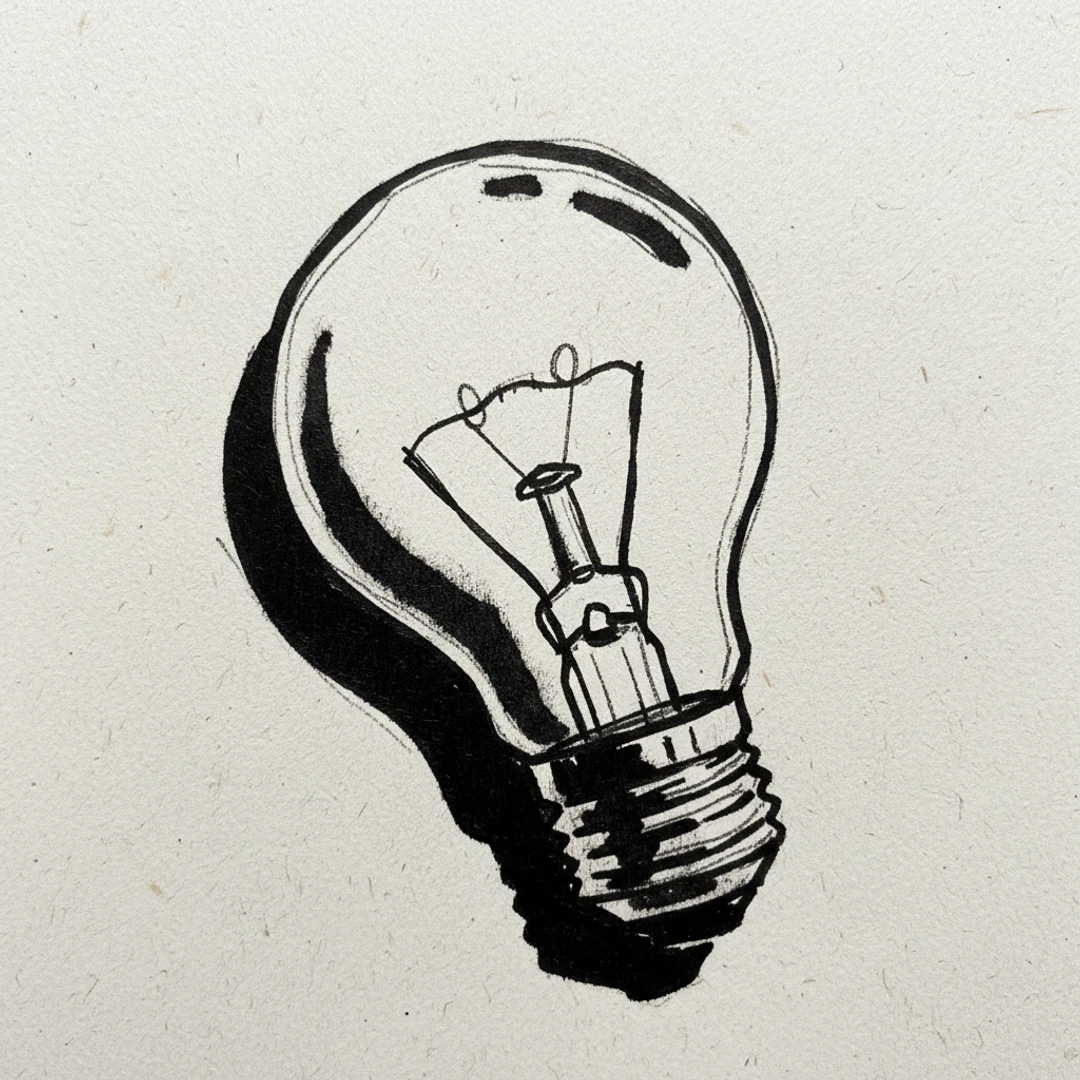
31. Lightbulb — A rounded glass bulb shape with a screw base at the bottom. Add a small filament inside and a few curved highlight lines.
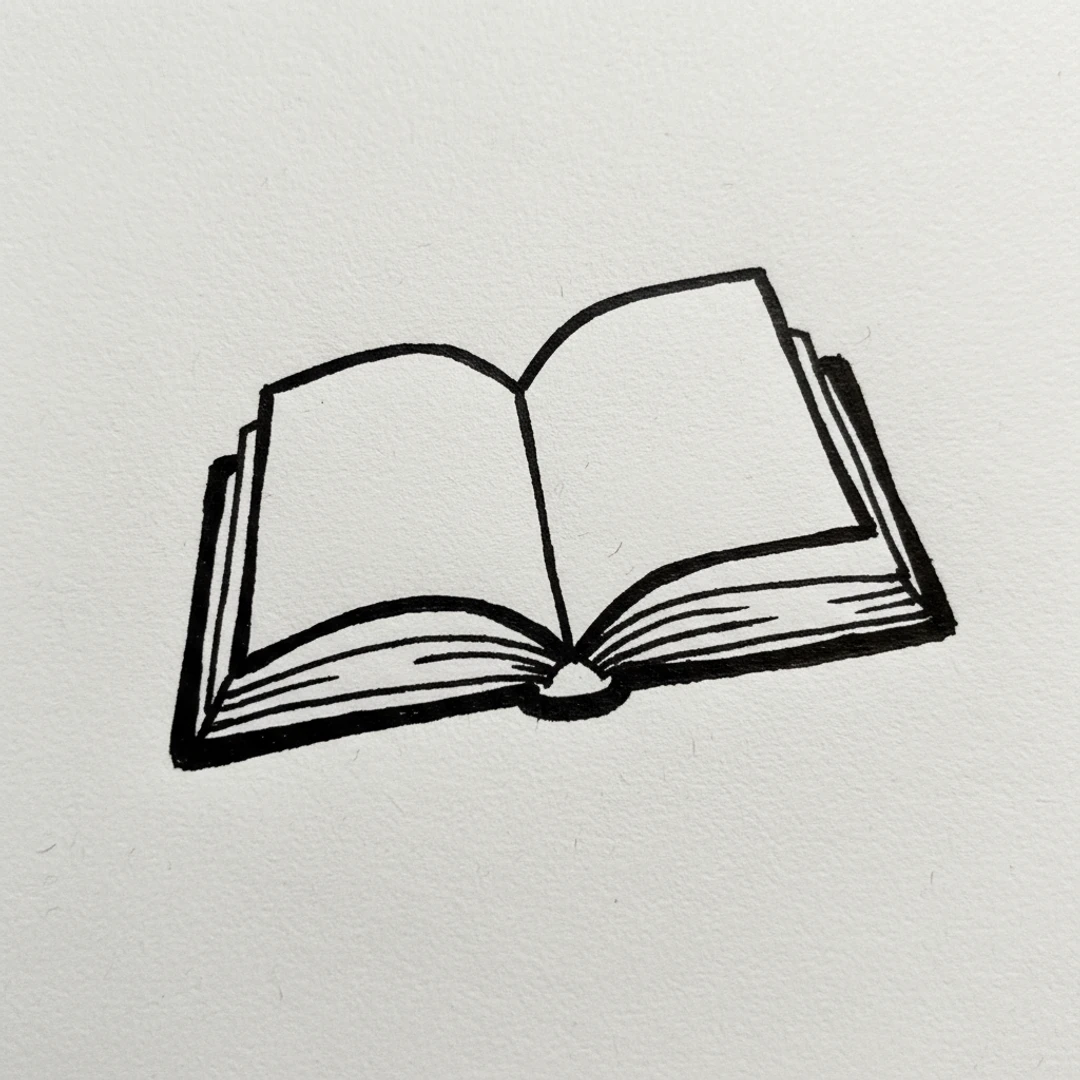
32. Open book — Two rectangles meeting at a slight V angle in the center, with curved horizontal lines across each page for text.
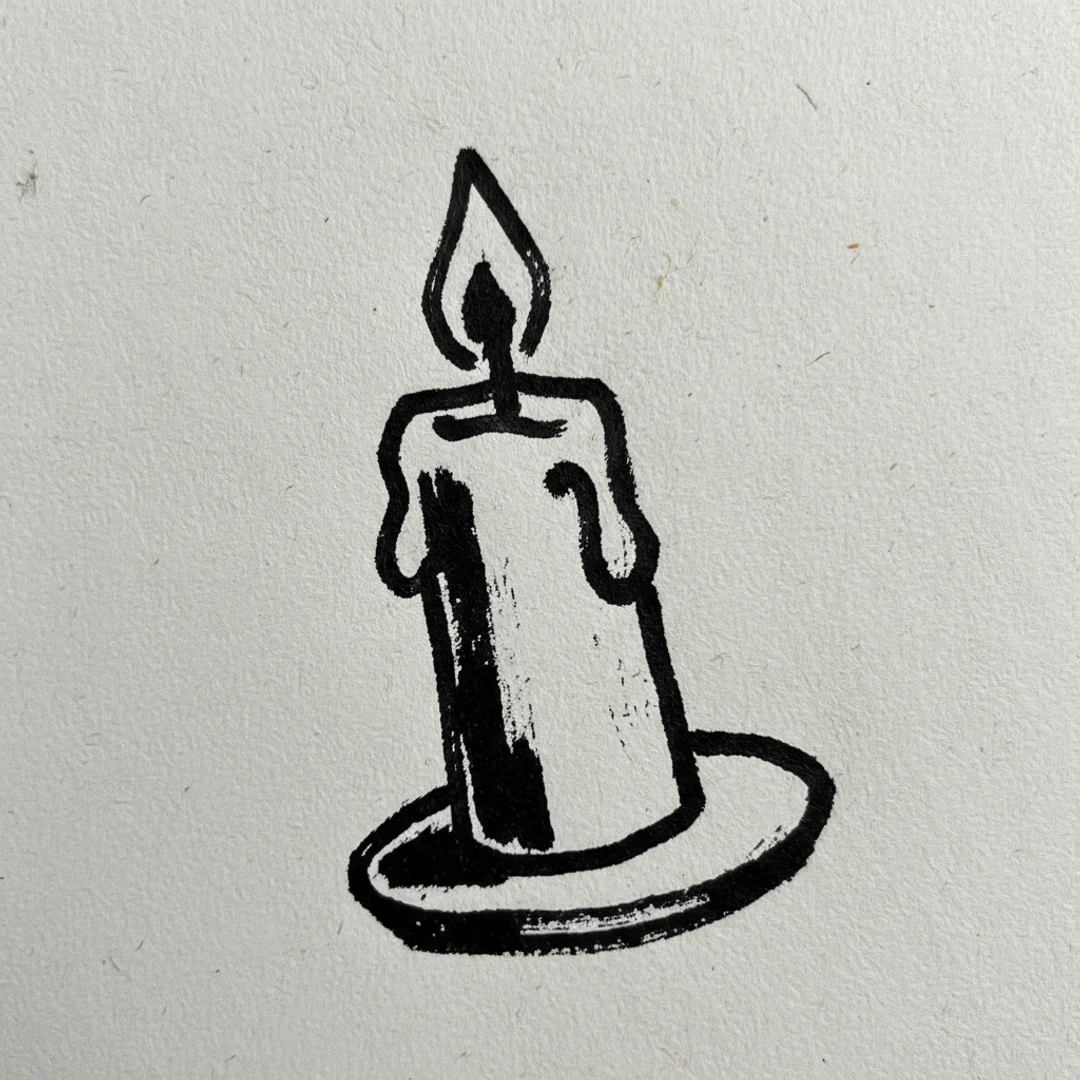
33. Candle — A cylinder with a small flame shape at the top. Add a few drips of wax down the side for character.
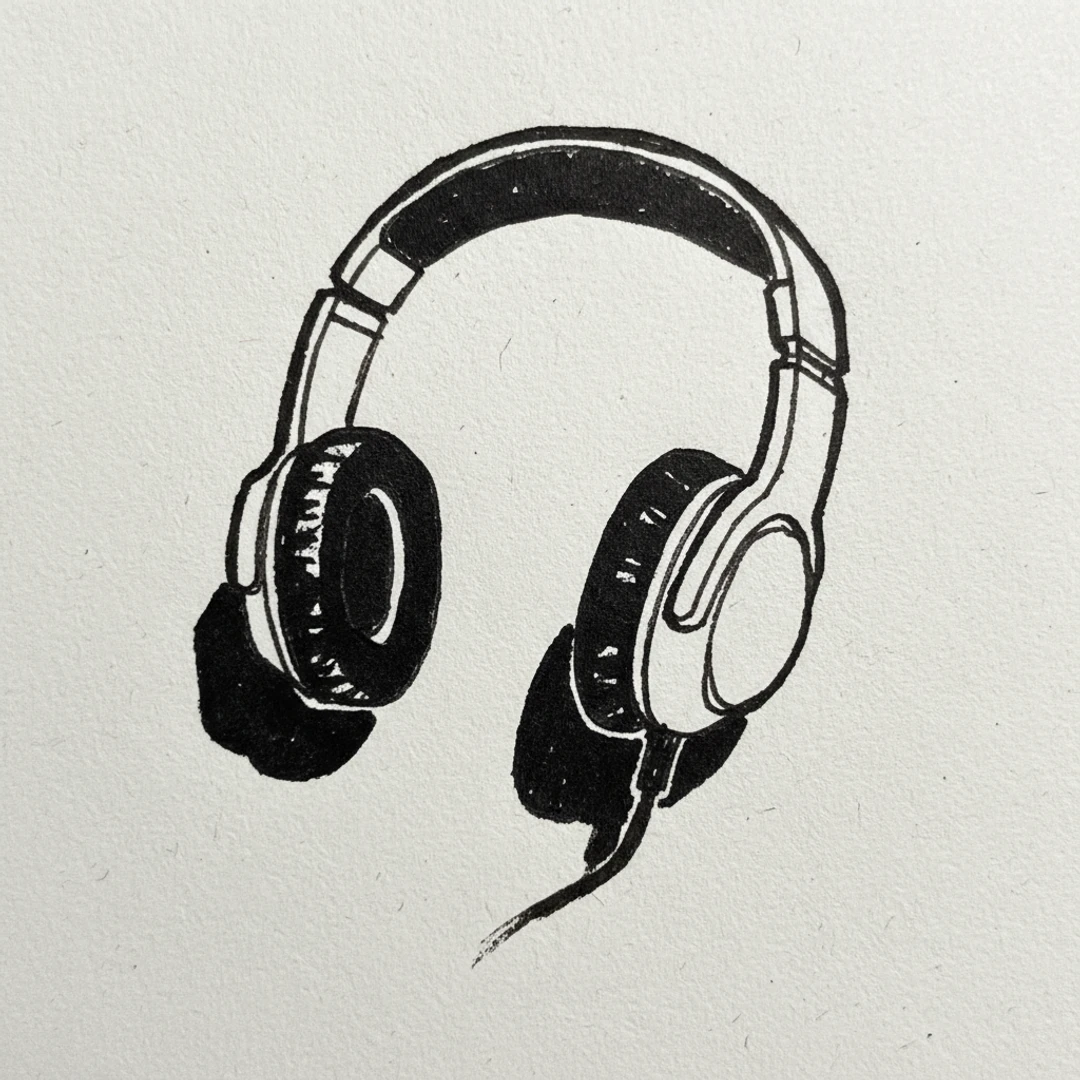
34. Headphones — Two circles (ear cups) connected by a curved band over the top. A surprisingly fun geometric challenge.
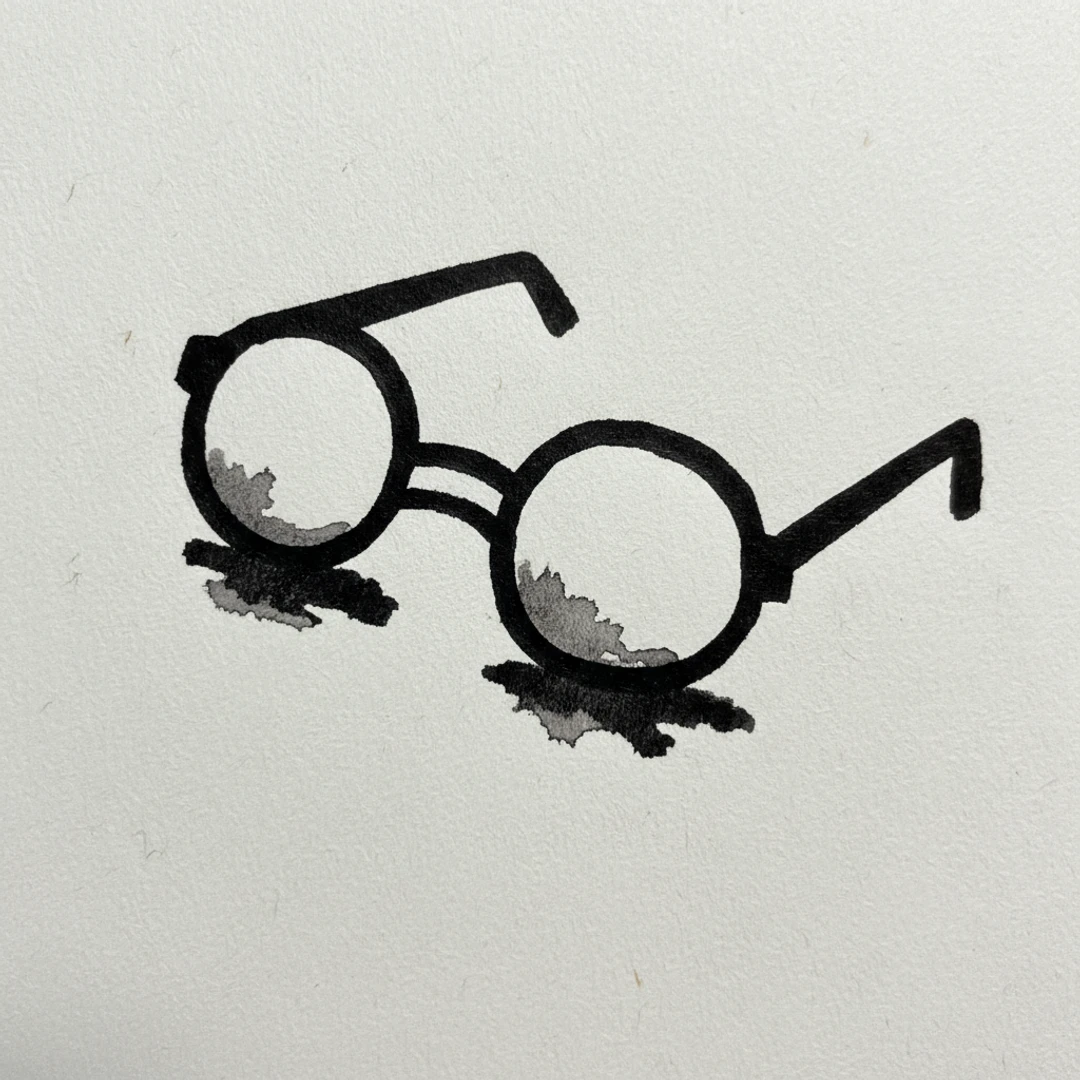
35. Glasses — Two circles connected by a short bridge in the middle, with small arms extending to the sides.
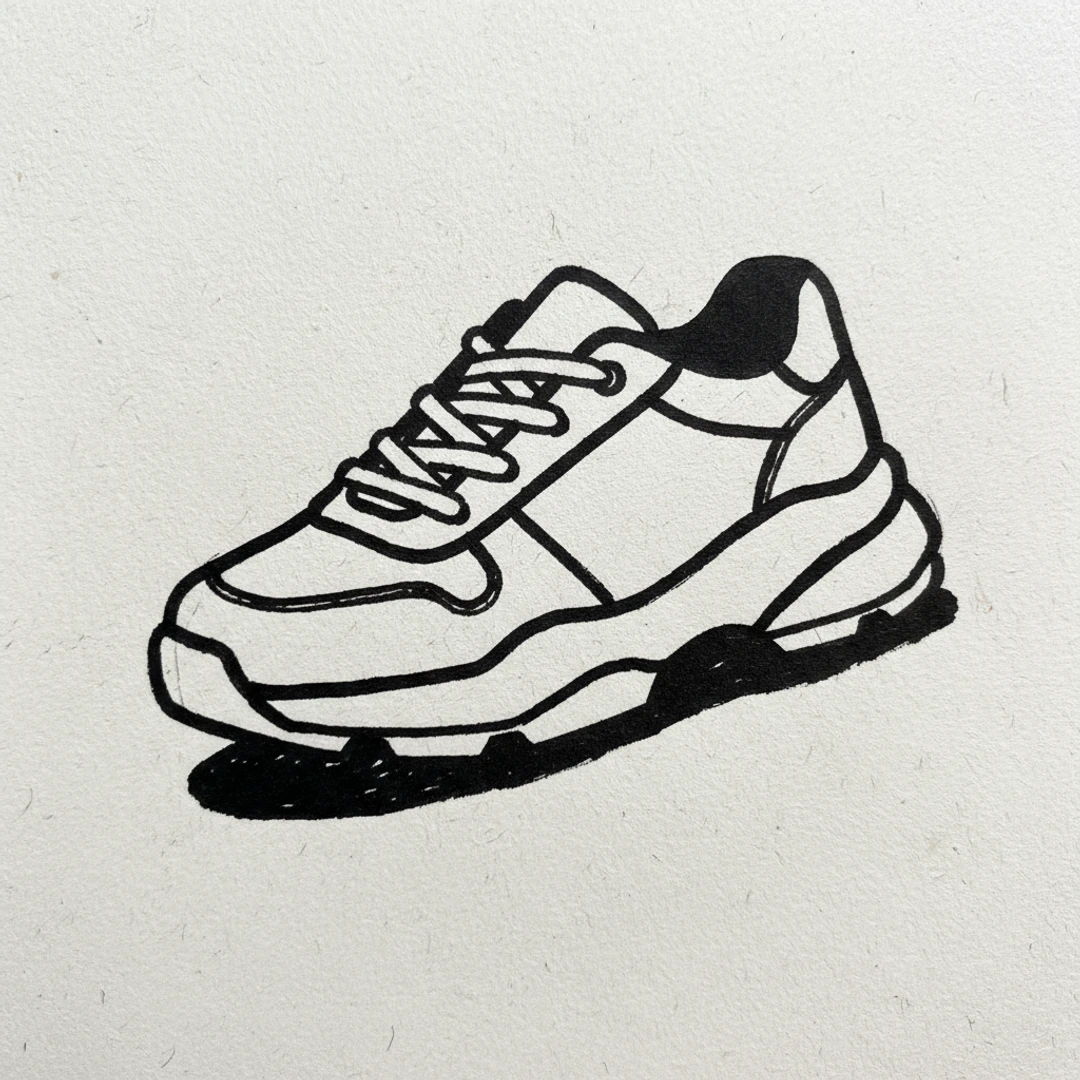
36. Sneaker — A thick sole with a simple upper, a tongue, and a few lace X shapes. Side profile is the easiest angle to start with.
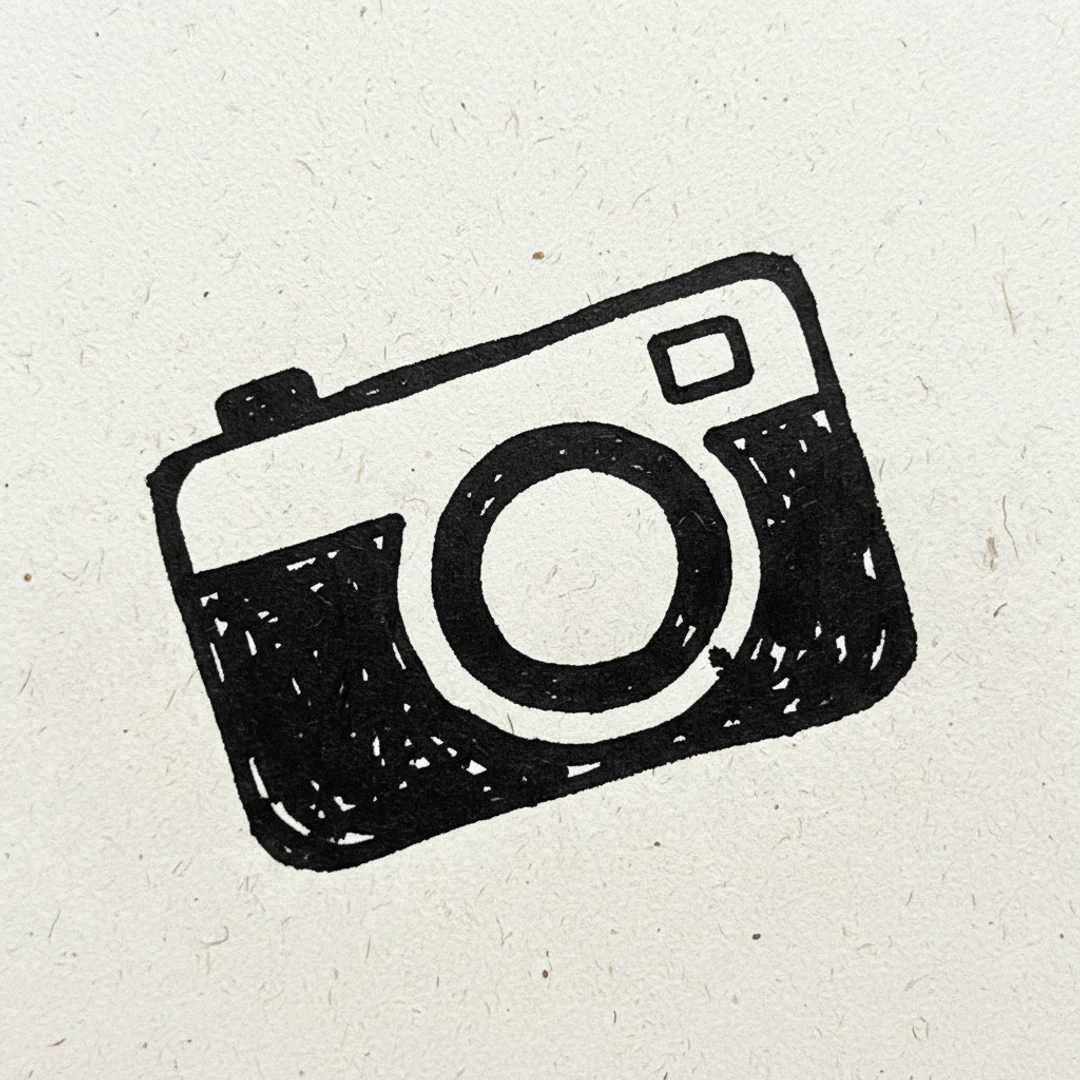
37. Camera — A rectangle body with a circle lens in the center, a small square viewfinder, and a bump on top for the flash.
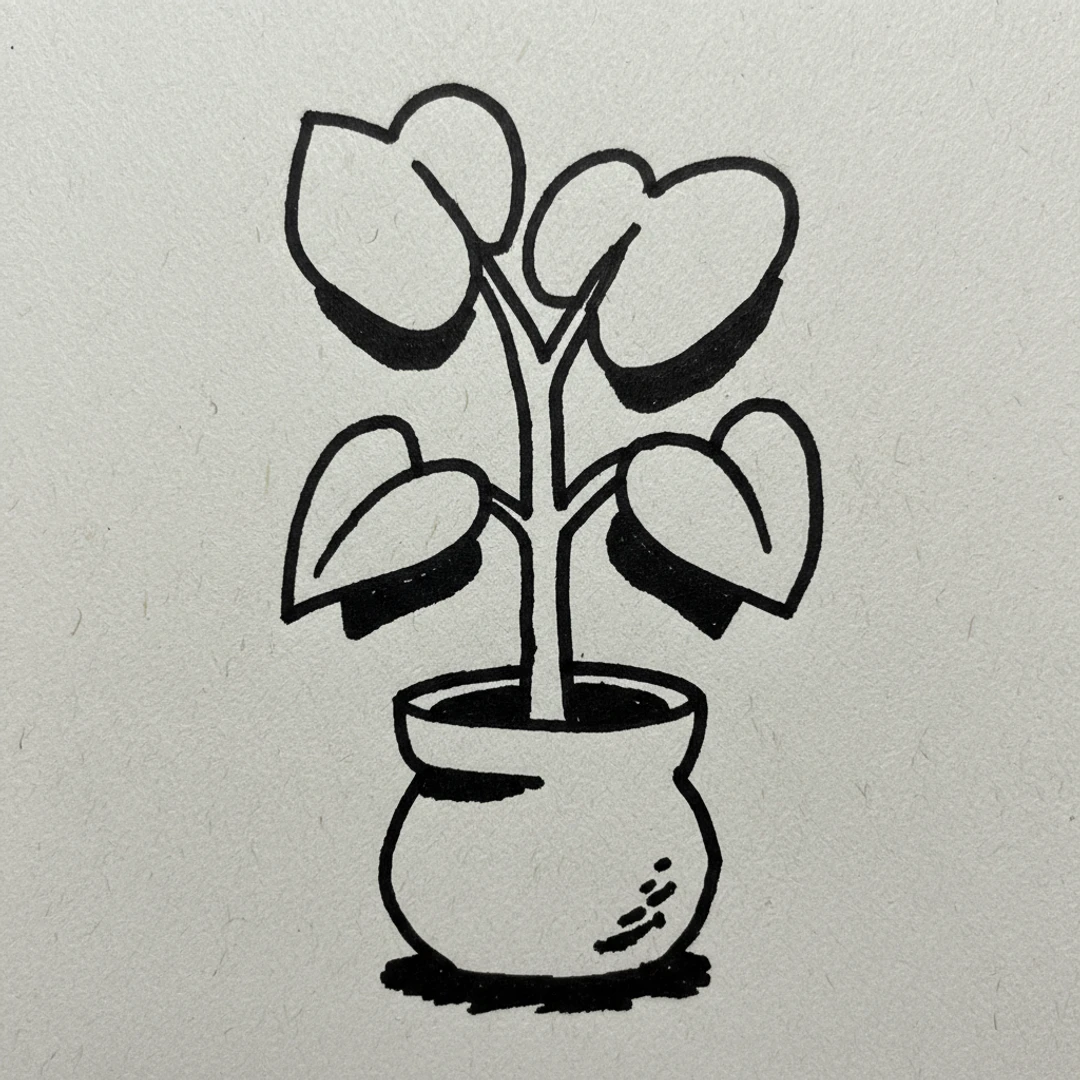
38. Potted plant — A terracotta pot shape (trapezoid) with a simple stem and two or three rounded leaves. Add soil lines at the top of the pot.
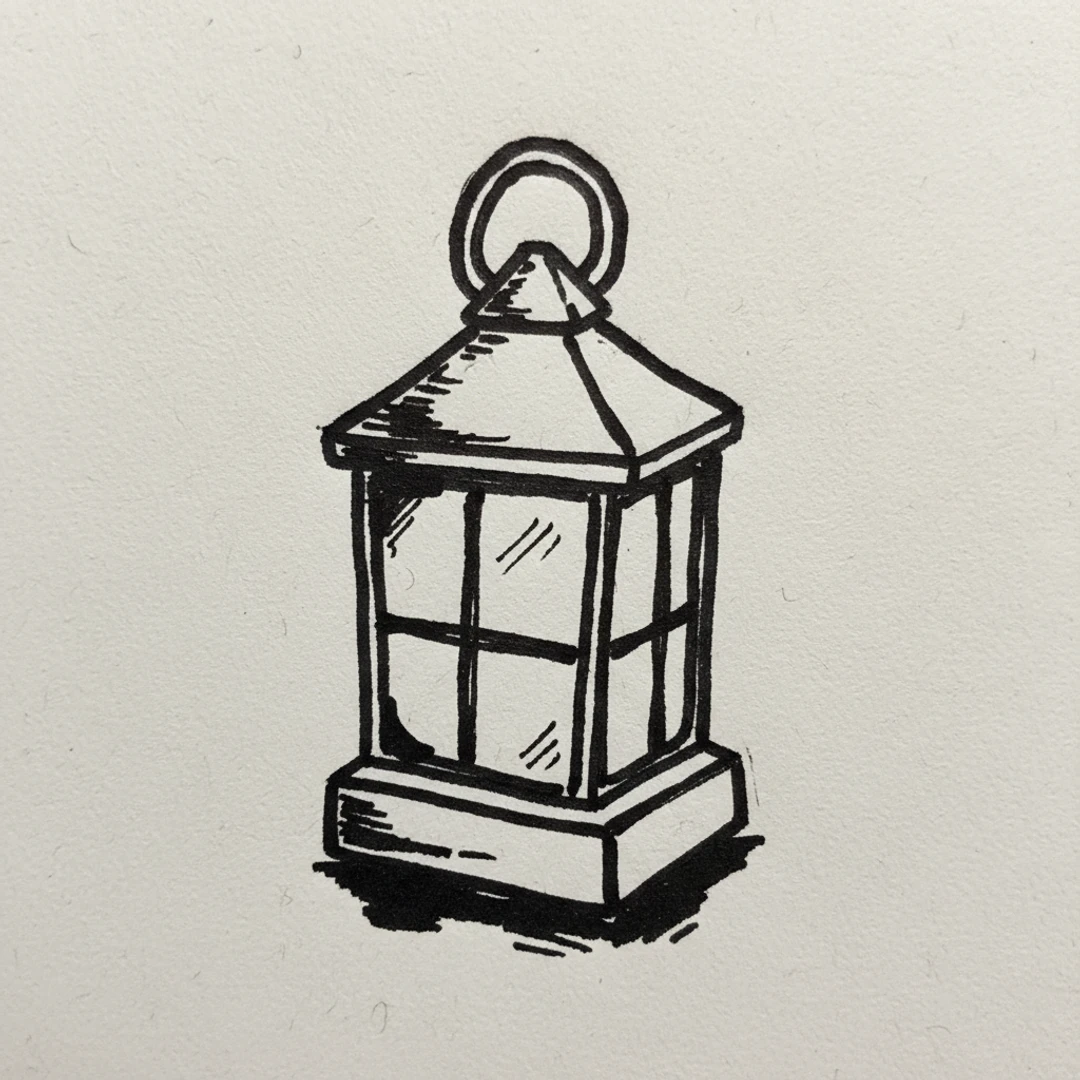
39. Lantern — A hexagonal or rectangular glass case with a candle inside and a handle arching over the top.
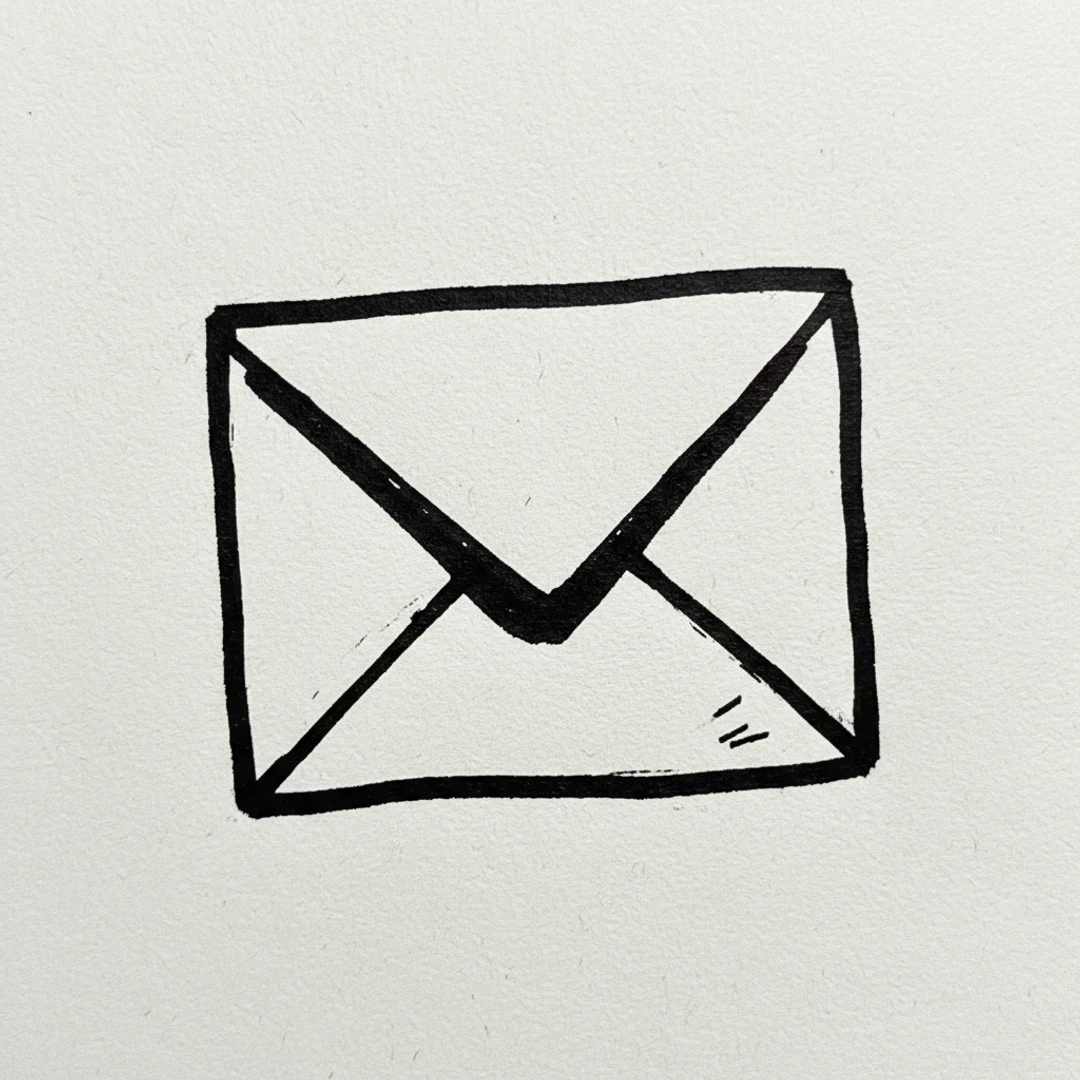
40. Envelope — A rectangle with a V-shaped flap at the top. Add diagonal lines from the corners meeting in the center for the back fold.
Easy Abstract & Doodle Ideas
Not everything needs to be representational. Abstract doodles are genuinely relaxing to draw, require zero "talent", and often look more impressive than realistic drawings. These are perfect for when you want to draw without any pressure.
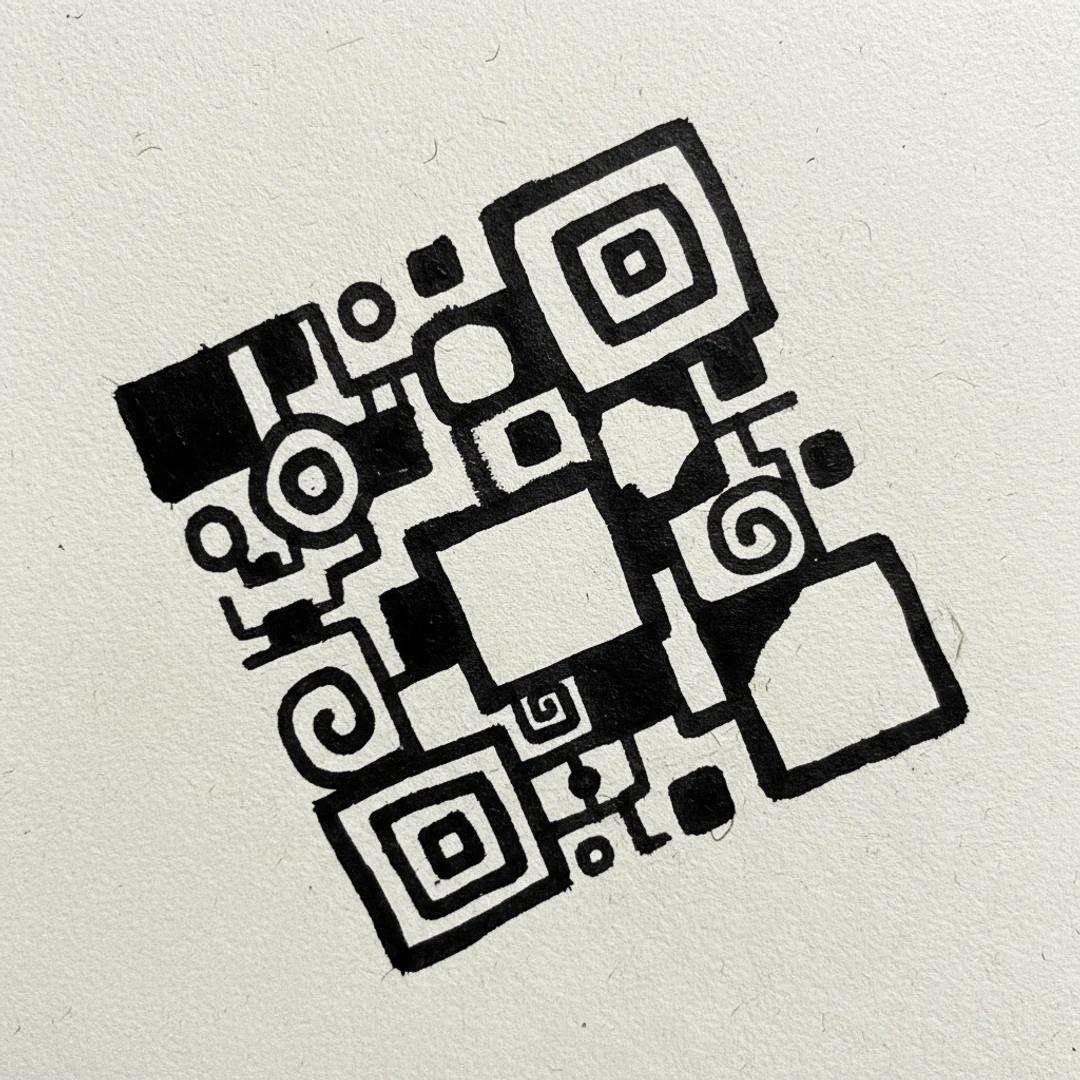
41. Zentangle pattern — Fill a shape with repeating geometric mini-patterns: dots, lines, spirals, grids. No wrong way to do it.
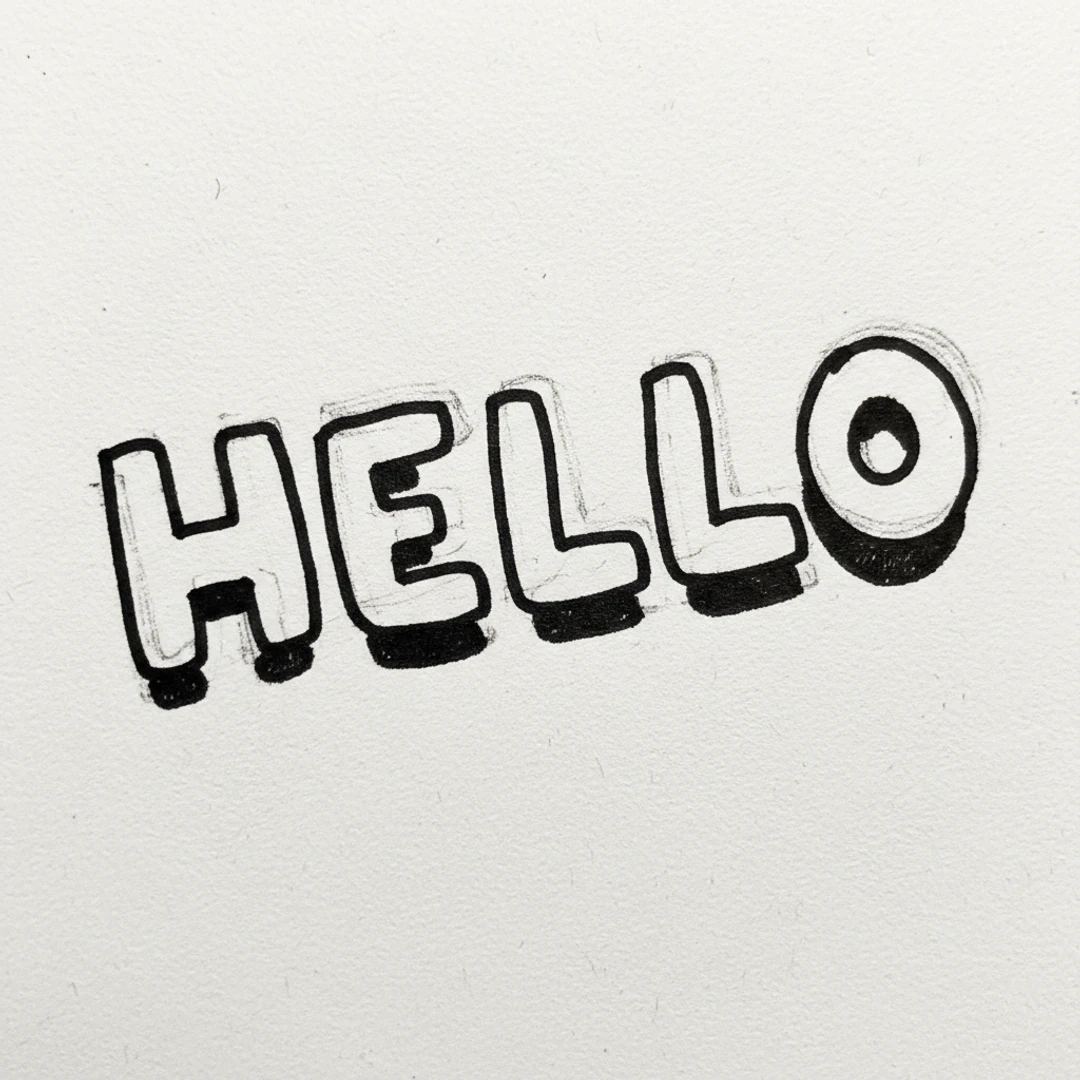
42. Bubble letters — Write your name or a word in big blocky letters, round the edges, add a highlight on each letter.
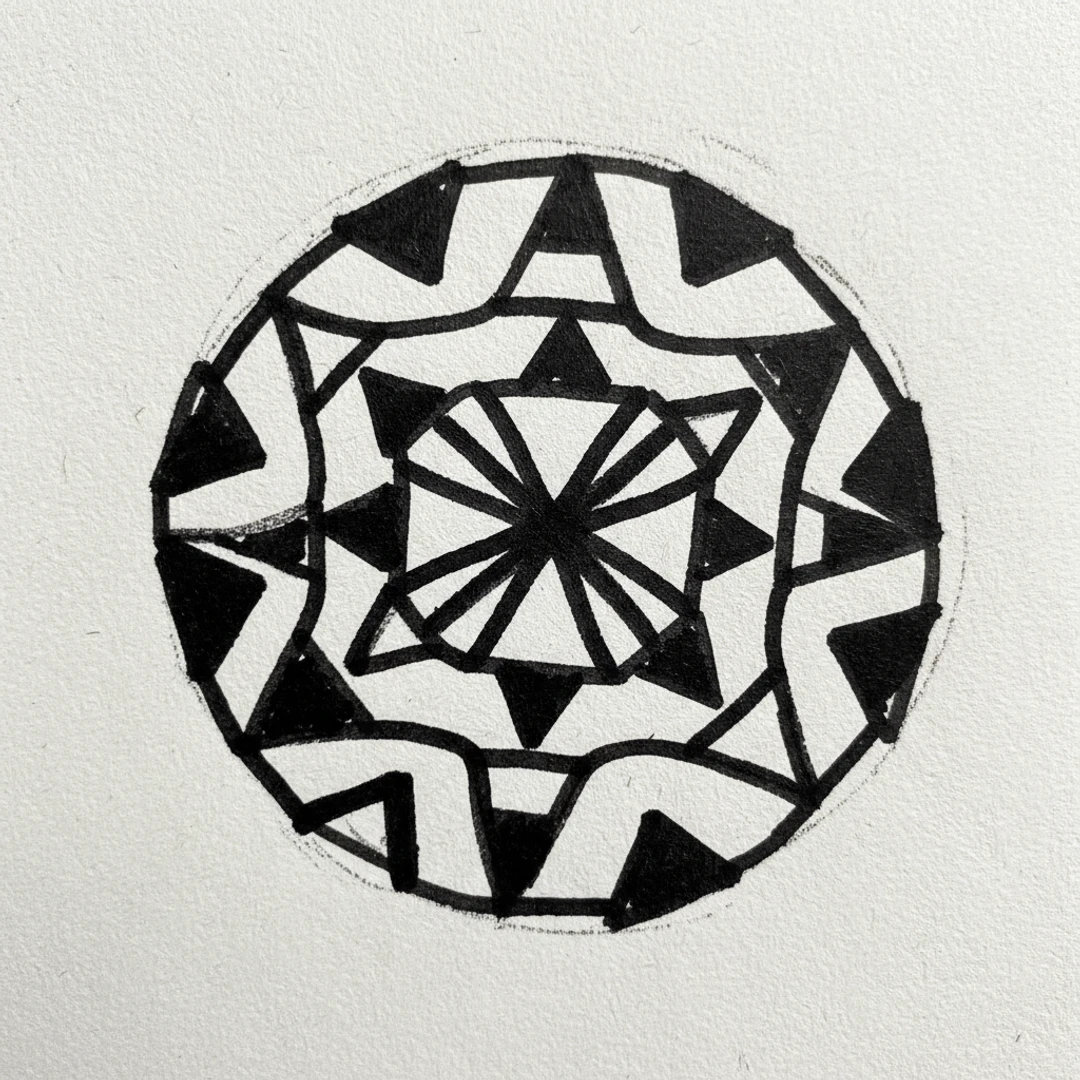
43. Geometric mandala — Start with a circle in the center, then draw rings of repeating shapes radiating outward. Meditative and impressive.
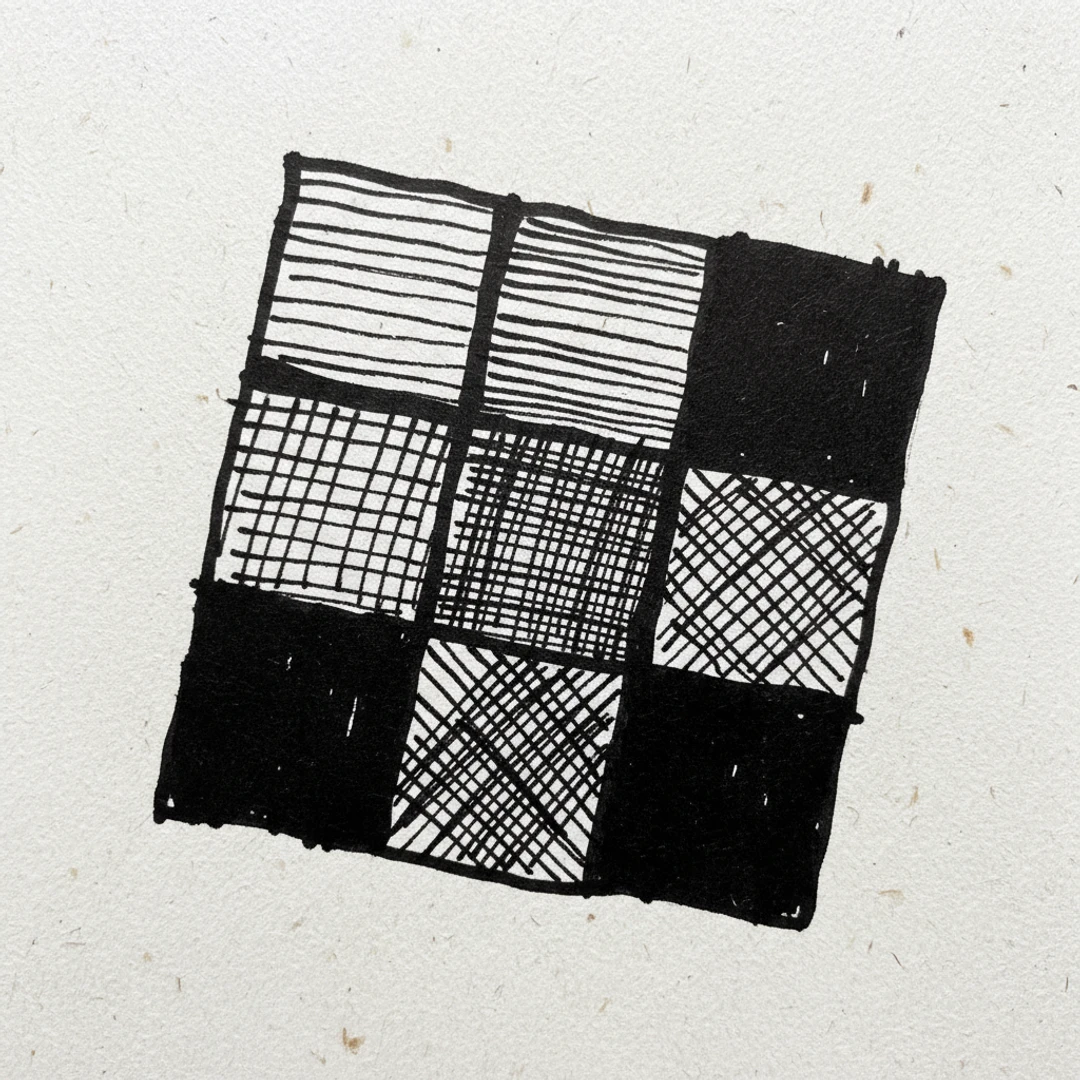
44. Hatching practice — Fill a rectangle with parallel lines, then cross them with perpendicular lines. Vary the density to create light and shadow. A foundational skill disguised as a doodle.
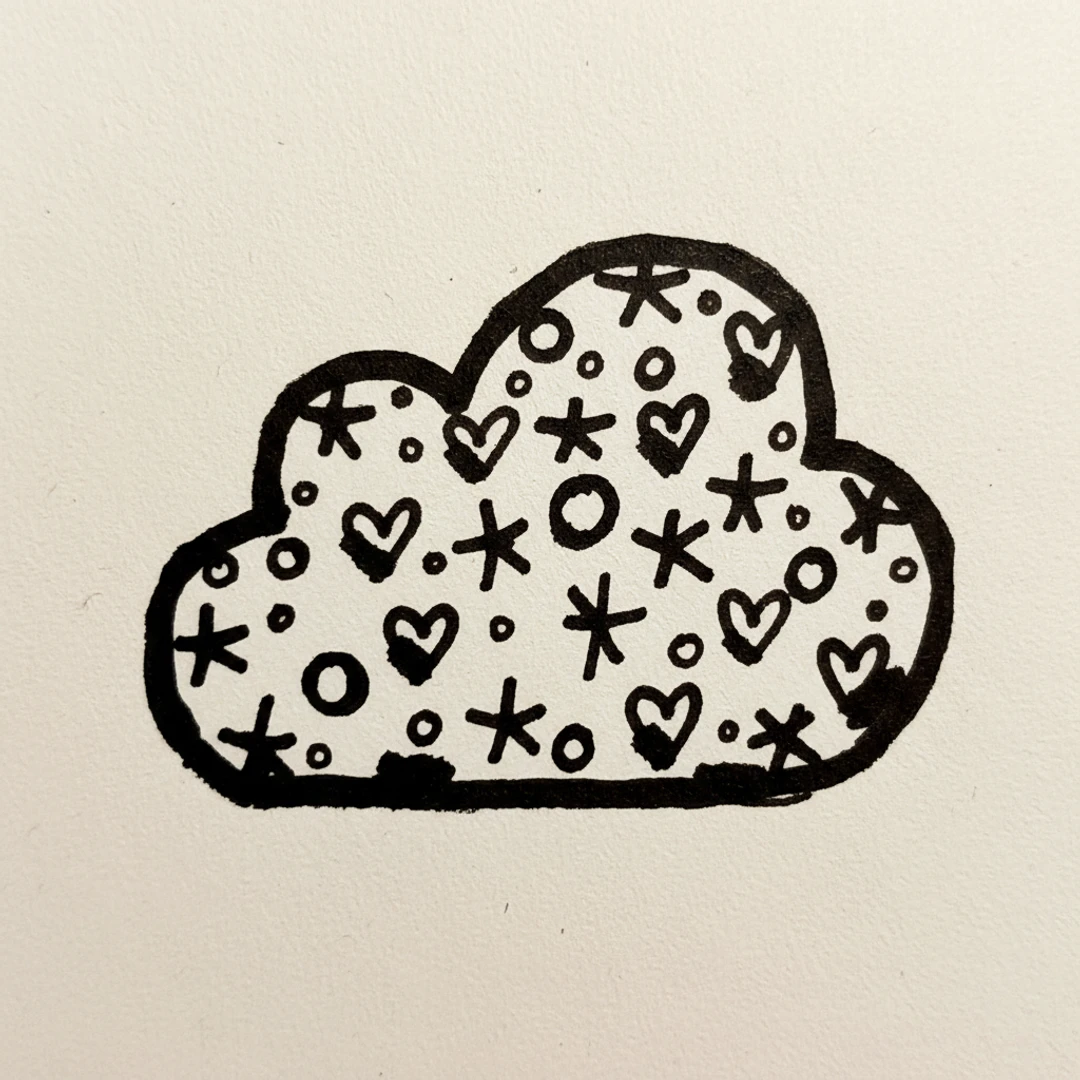
45. Cloud of shapes — Draw an outline of a cloud and fill it entirely with tiny shapes: stars, hearts, circles, triangles. Great for when you're watching TV.
46. Eye of the storm — A small circle in the center with spiraling lines growing outward. Surprisingly hypnotic to draw.
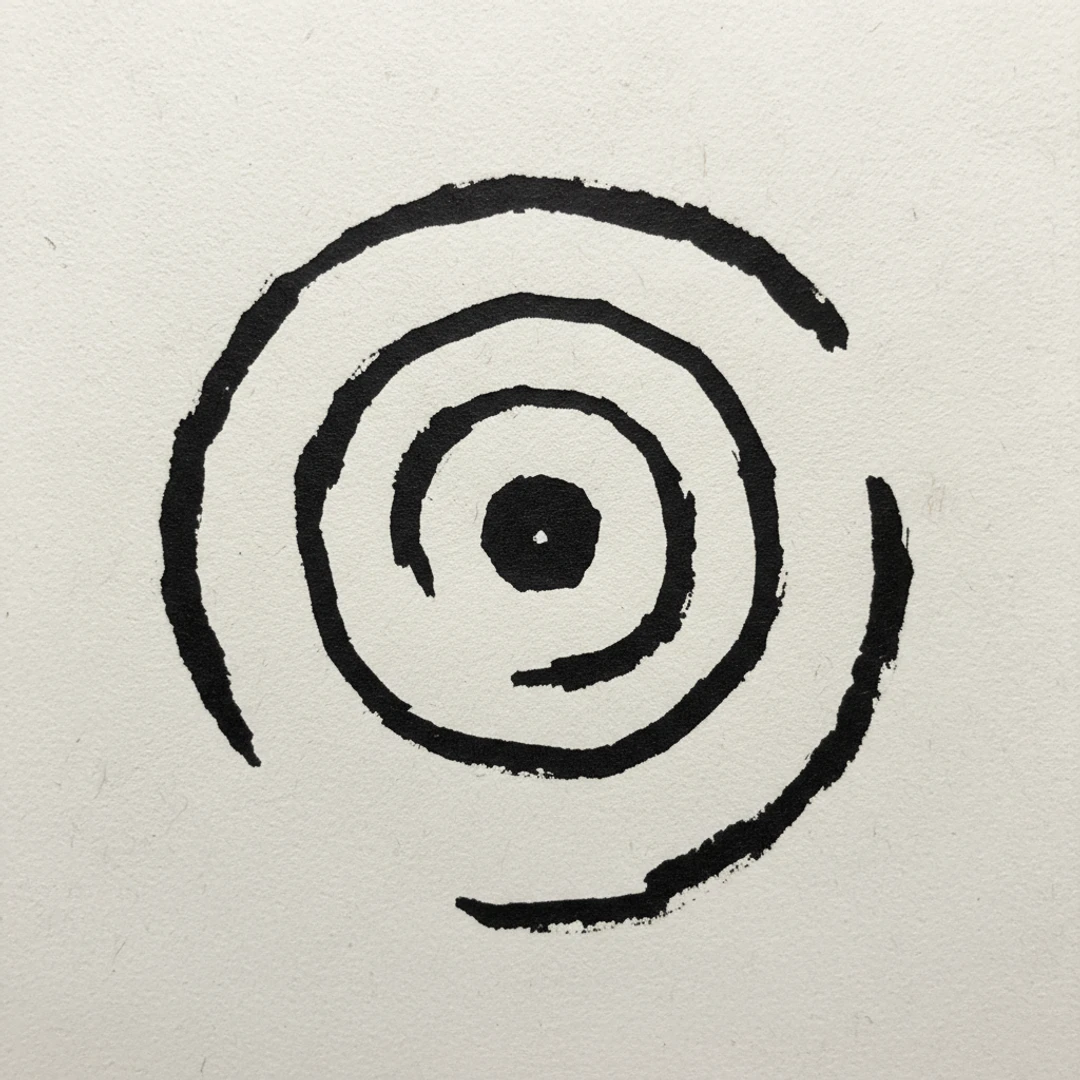
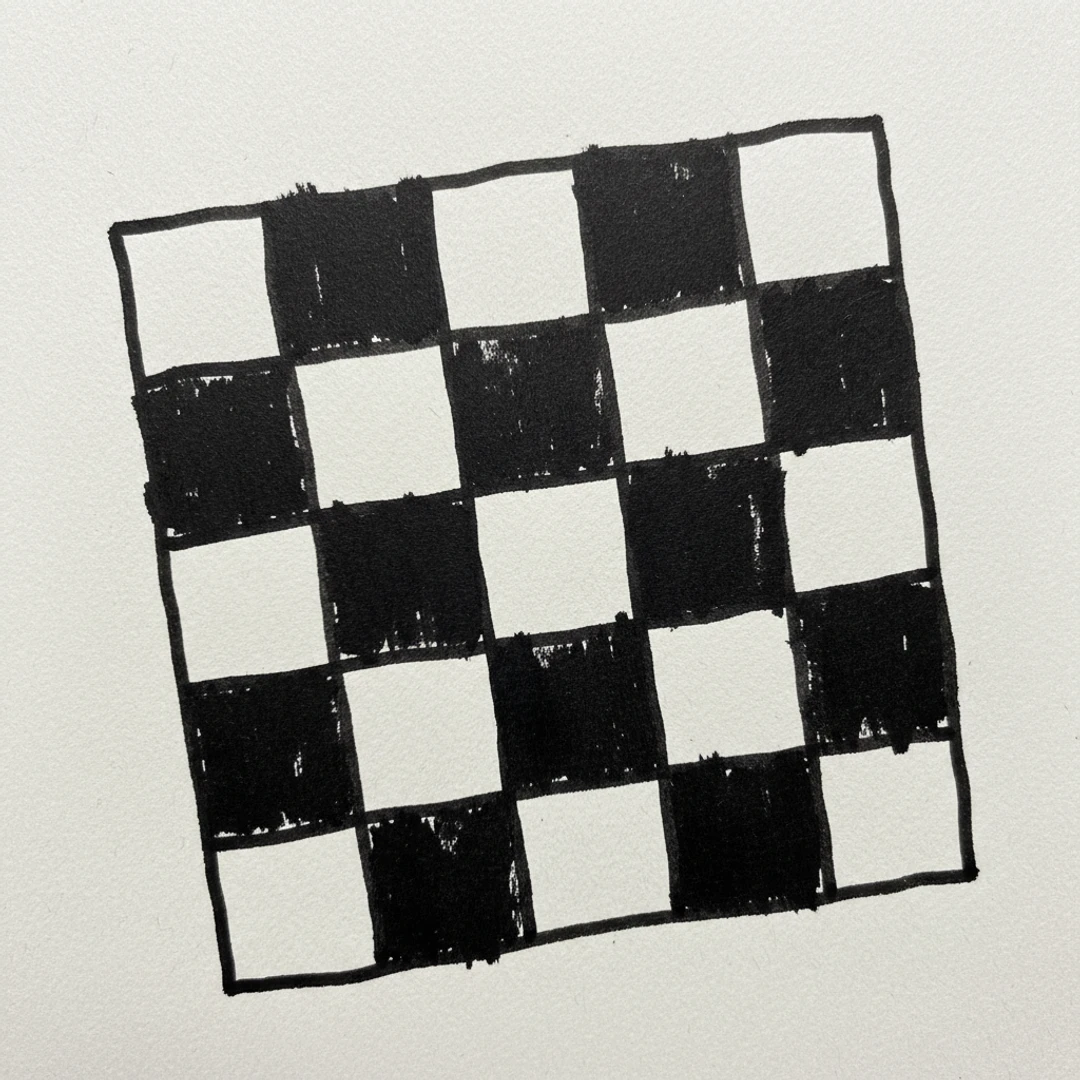
47. Checkerboard shading — A grid where every other square is filled in. Vary the square sizes for a more interesting result.
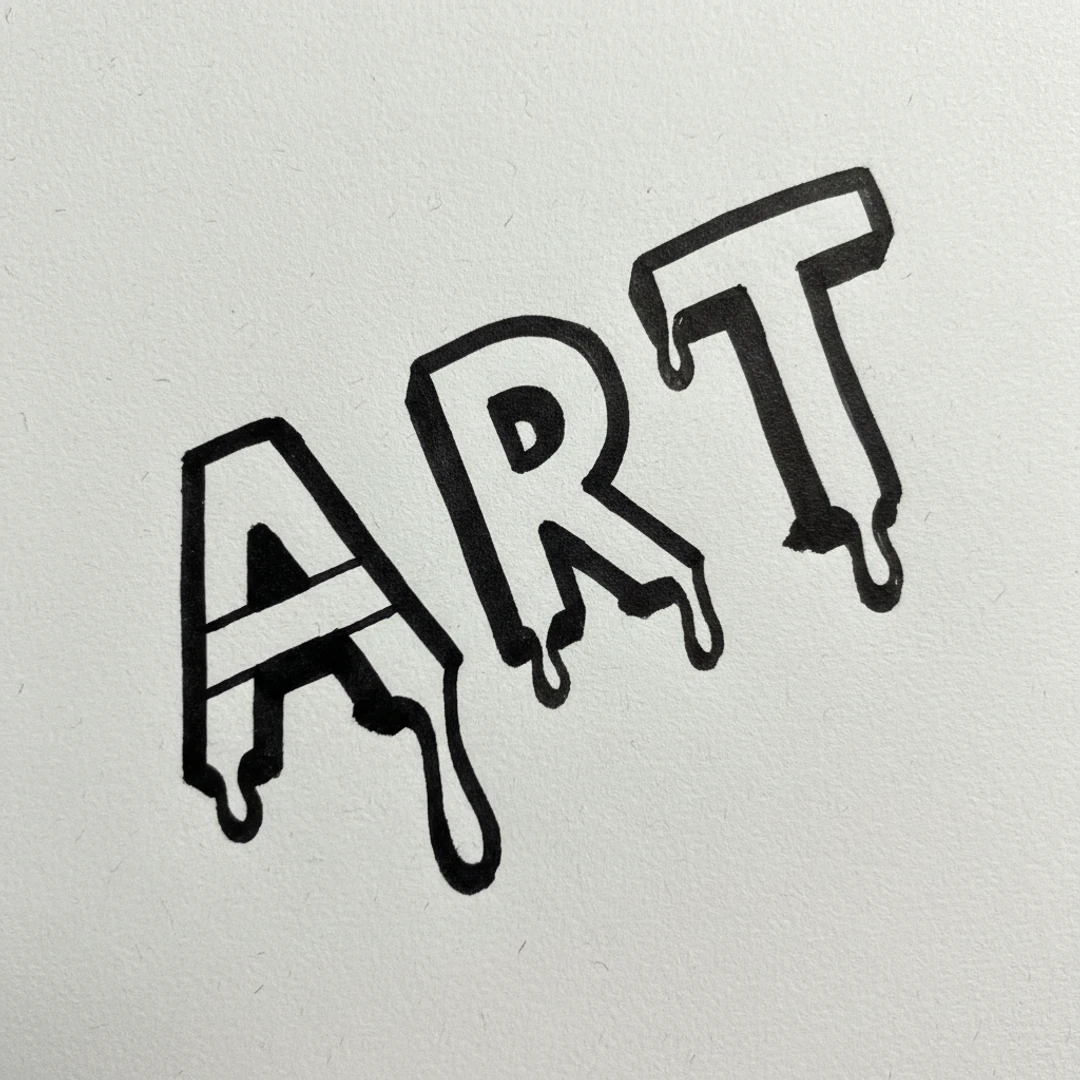
48. Dripping letters — Write a word in any style, then add drip shapes hanging off the bottom edge of each letter.
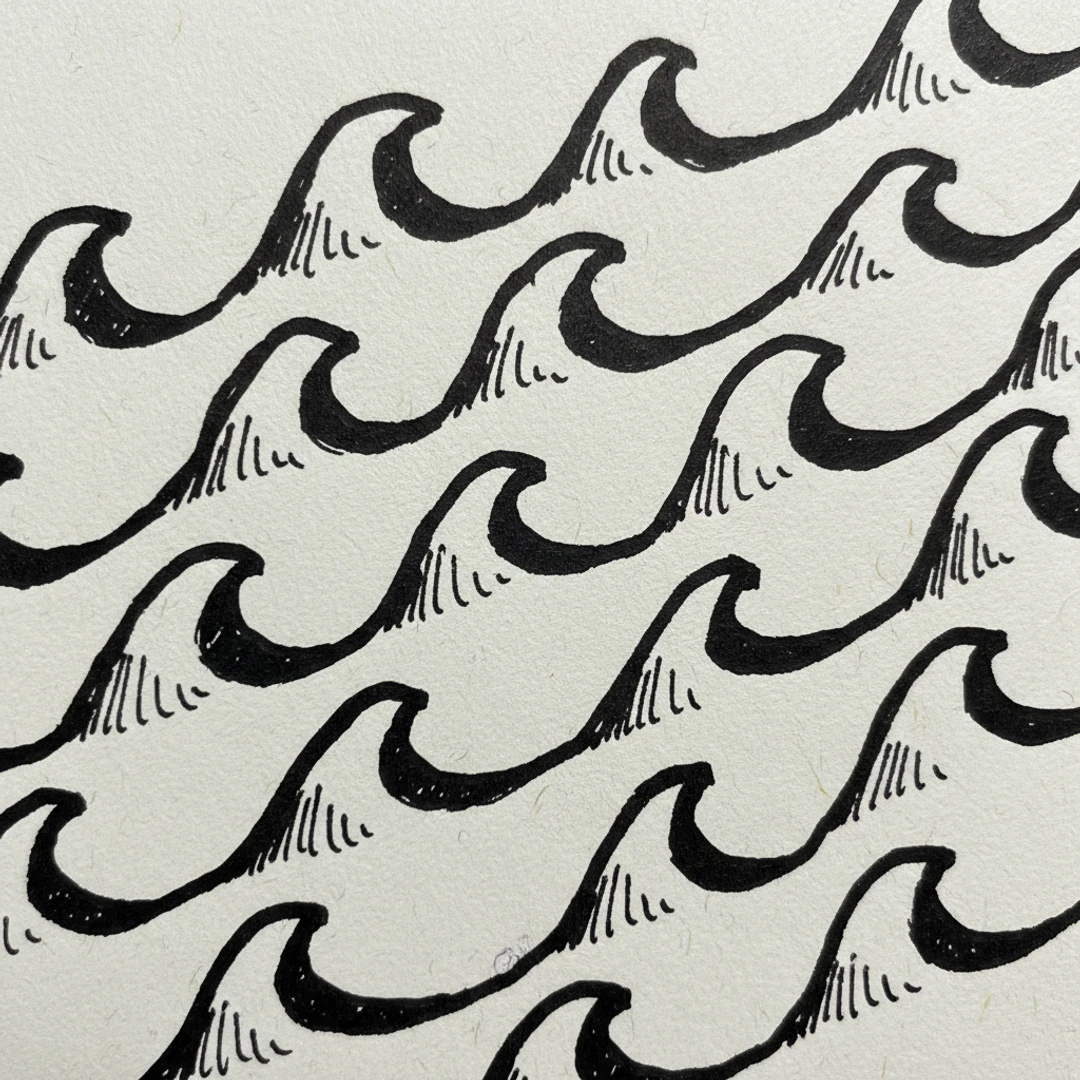
49. Wave pattern — Repeating curved lines across a page, each one slightly offset from the one above it. Calming to draw, beautiful to look at.
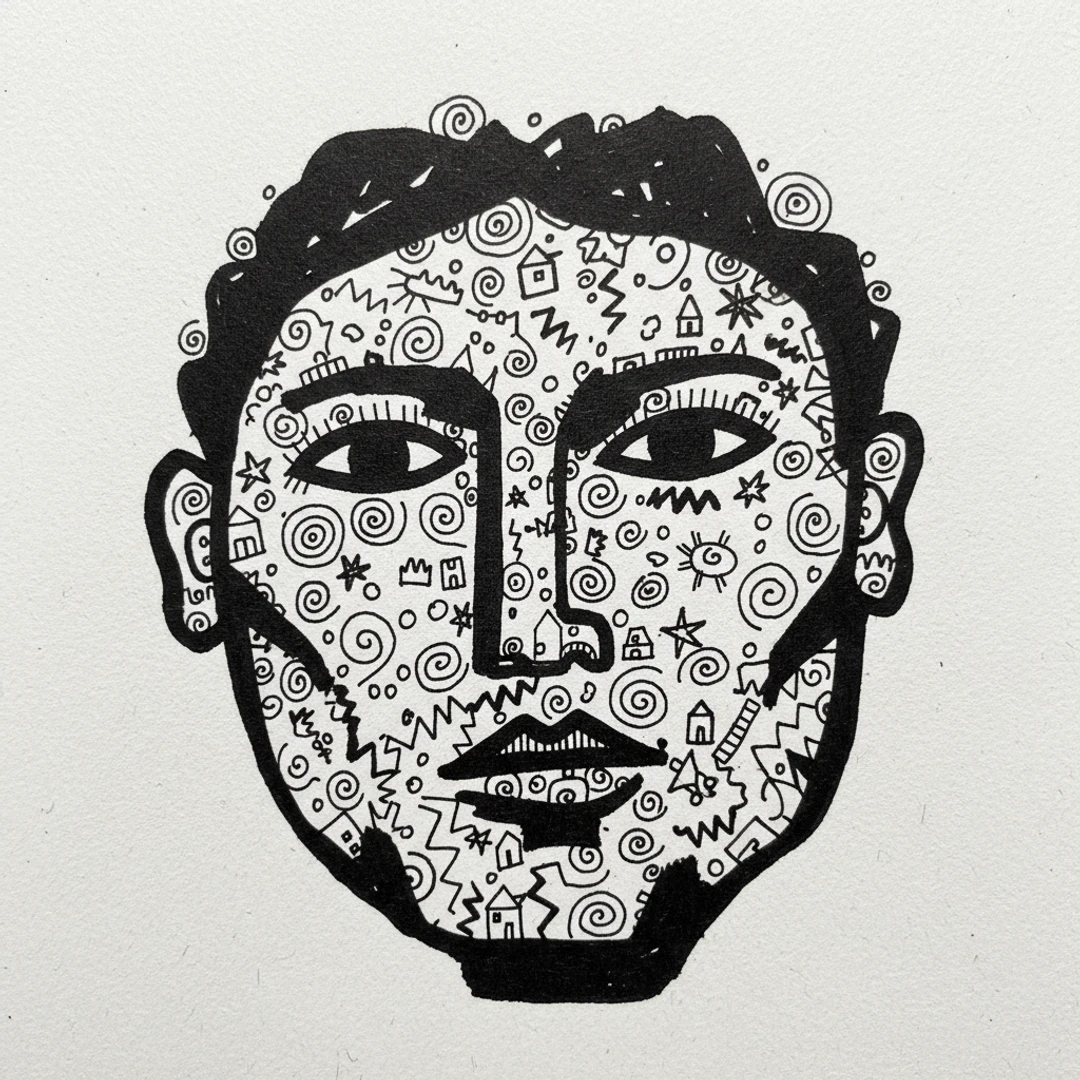
50. Doodle portrait — Draw a basic oval face, then fill it with tiny doodles instead of realistic features: a garden for hair, windows for eyes, a zipper for a mouth. No rules.
Tips for Making Easy Drawing Feel Even Easier
Don't start with a blank page. Put a single dot or line on the paper. The blank page is the hardest part — once you've made your first mark, the rest follows naturally.
Use references freely. Drawing from a reference photo isn't cheating. Every professional artist does it. Google the subject, put it on your phone next to your sketchbook, and draw what you see. Your eye-hand coordination will improve with every drawing.
Embrace wonky lines. The slight imperfections in your lines are what make hand-drawn art feel human and alive. Perfectly smooth lines are what computers are for.
Start light, go dark. Sketch loosely with minimal pressure first. Refine the lines you like, then add weight and detail. Erasing rough sketches is much easier than recovering from dark committed lines.
Set a timer. Give yourself 5 minutes per drawing. The time constraint removes the pressure to make it perfect and forces you to focus on what actually matters.
Frequently Asked Questions
What is the easiest thing to draw for beginners?
Simple organic shapes are the easiest starting point — a sleeping cat, a mushroom, or a sunflower. These subjects are forgiving of imperfect lines and still look recognizable when finished. Food drawings like strawberries or donuts are also great because their shapes are simple and the results are immediately satisfying.
How do I get better at drawing quickly?
The single most effective thing is to draw every day, even for just 10 minutes. Consistency matters far more than session length. Combine that with drawing from real-life references rather than from imagination, and you'll see noticeable improvement within weeks.
What should I draw when I have no inspiration?
Draw something physically in front of you right now — your hand, your phone, a glass of water. Observational drawing removes the pressure of inventing a subject entirely. If you still feel stuck, use a random drawing idea generator to take the decision out of your hands.
Are these easy drawing ideas good for kids?
Absolutely. Most of these drawing ideas are perfect for kids — especially the animals and food sections. The simple shapes and forgiving subjects make them ideal for young artists building confidence with pencil drawing.
Do I need expensive supplies to start drawing?
Not at all. A basic HB pencil and any paper will do. Most of the drawings on this list were done with nothing more than a pencil and a sketchbook. Supplies only matter once you know what you enjoy drawing and want to explore specific techniques.
How long should a beginner drawing take?
It varies, but most of the ideas on this list can be completed in 5–15 minutes as a beginner. Don't measure the quality of a drawing by how long it took. Some of the most satisfying sketches are the fastest ones.
Looking for more inspiration? Browse the full What to Draw database for thousands of categorized drawing ideas.
Share Your Drawings
Soon you'll be able to share what you create and see what others are drawing.
No spam. Just a heads up when we launch.